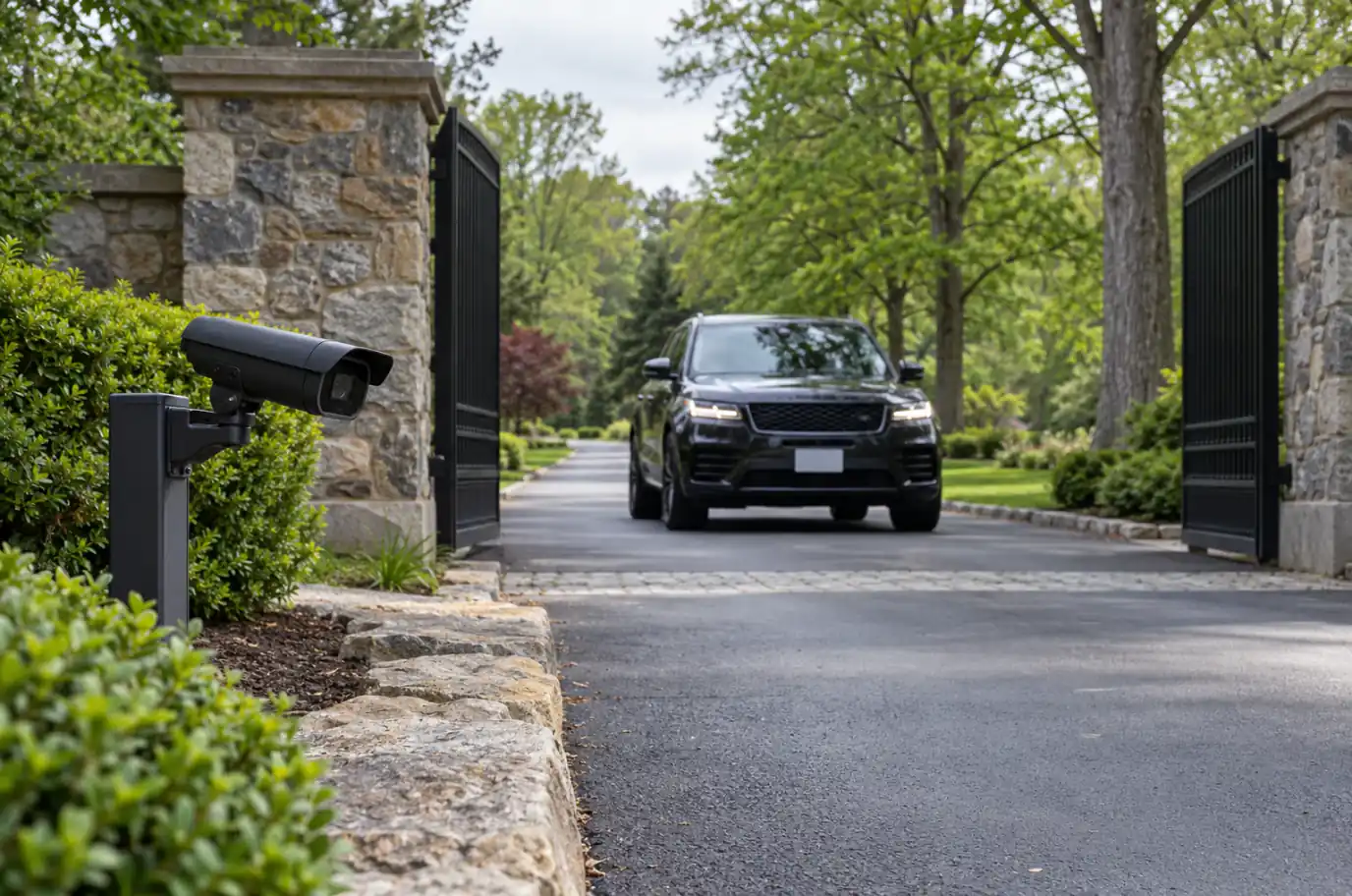
Estate driveway gate far from the house — the classic spot for a solar-powered 4G security camera

Solar & 4G Security Cameras: Covering Driveways, Gates and the Corners Power Can't Reach

Julio CabreraFounder & Lead Low-Voltage Technician8 min read

Last updated:

The Coverage Gap on Large Properties

Solar-powered 4G cameras solve the classic large-property problem: the gate, dock, or barn that sits beyond Wi-Fi range with no power nearby. A panel keeps the battery charged, a cellular radio replaces Wi-Fi, and local/cloudless recording options mean no mandatory fees — though Connecticut winters demand honest panel sizing.

Walk any two-acre property in backcountry Greenwich or northern Westchester and the pattern repeats: excellent camera coverage at the house, and a quarter-mile of driveway, a gate on the road, and outbuildings with none. Yet the gate is where a stranger's vehicle appears first — minutes before it reaches your door.

Until recently the choices were bad: trench 400 feet of conduit, or accept the blind spot. The 2026 generation of self-powered cameras added a third option.

How Solar + Cellular Cameras Work

Three components make the camera self-sufficient:

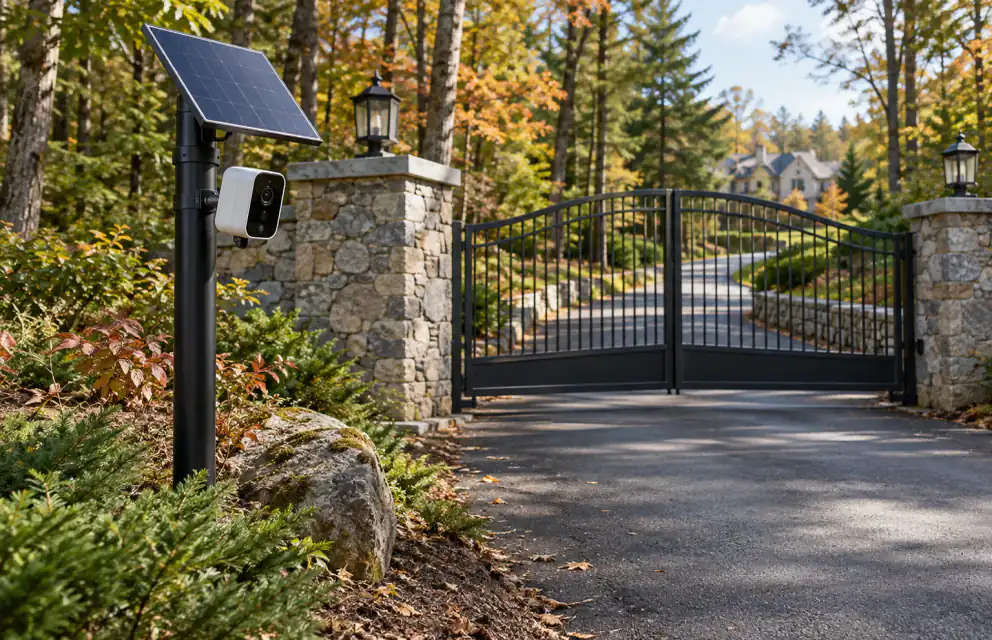
  • Solar panel + battery. A small panel (usually 5–15W) tops off an internal battery. Sized correctly, the camera runs indefinitely with zero maintenance.
  • 4G/5G LTE radio. Instead of joining your Wi-Fi, the camera uses a cellular data plan (typically $5–15/month, or metered) — the one recurring cost in the setup. Where your Wi-Fi genuinely reaches, a solar Wi-Fi model skips even that.
  • Local recording + edge AI. Footage saves to an SD card or syncs to a home hub; person/vehicle detection runs on-device, so the cellular link only wakes for real events — which also protects the battery and the data plan.

Industry trend reports call these self-sufficient surveillance nodes for a reason: cutting power or jamming Wi-Fi — the two classic ways intruders defeat cameras — does nothing to a device with its own battery and its own network.

Where They Shine

  • Gates and driveway entrances — the highest-value blind spot on any estate. Pair with a plate-reading camera at the pinch point and you log every vehicle before it reaches the house.
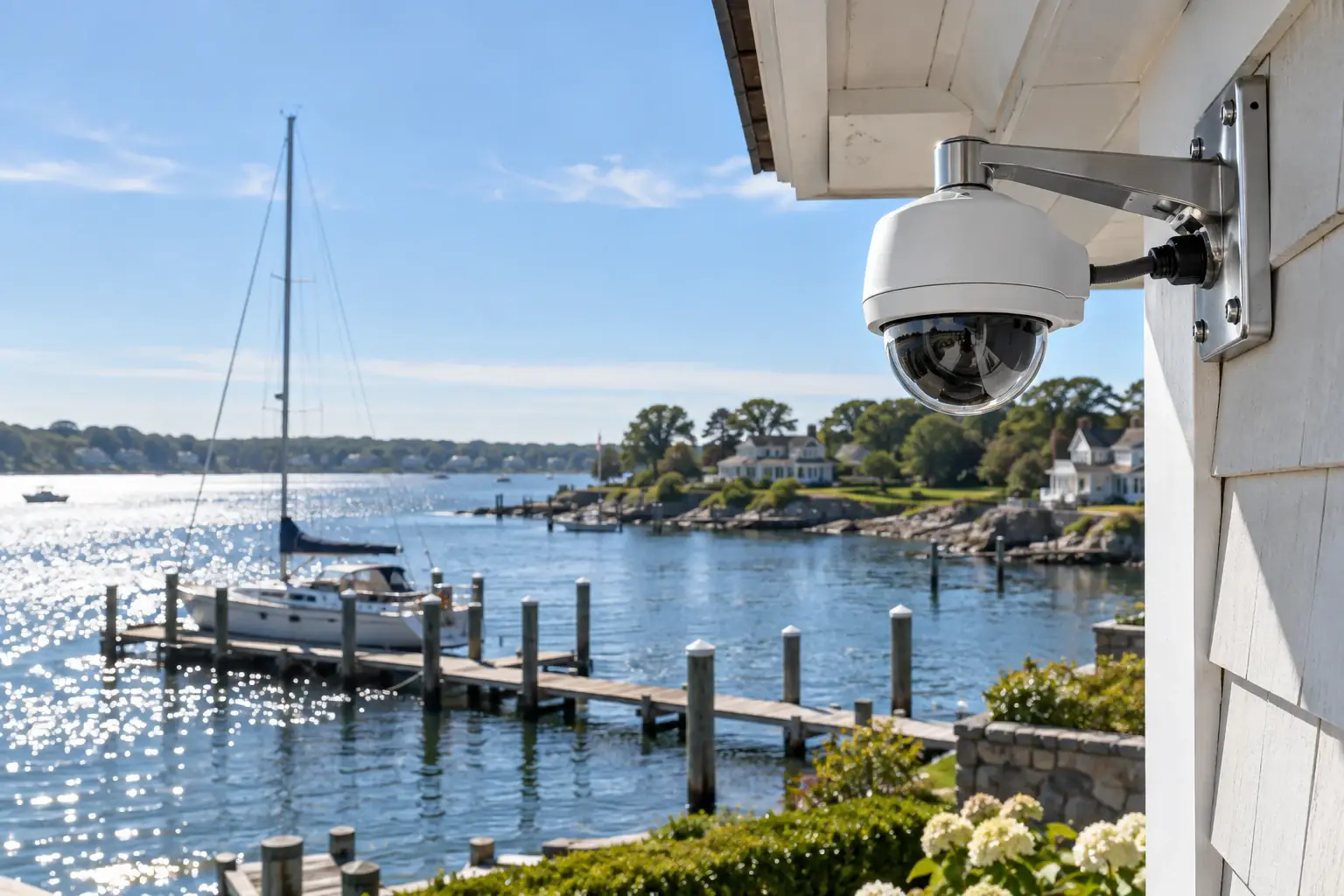
  • Docks and waterfront — private docks sit far from power and take weather all year. (Boat owners: see our dedicated boat & dock security guide.)
  • Barns, pool houses, detached garages — anywhere equipment and tools live unattended.
  • Construction and renovation sites — temporary coverage that moves with the project, no wiring to abandon.
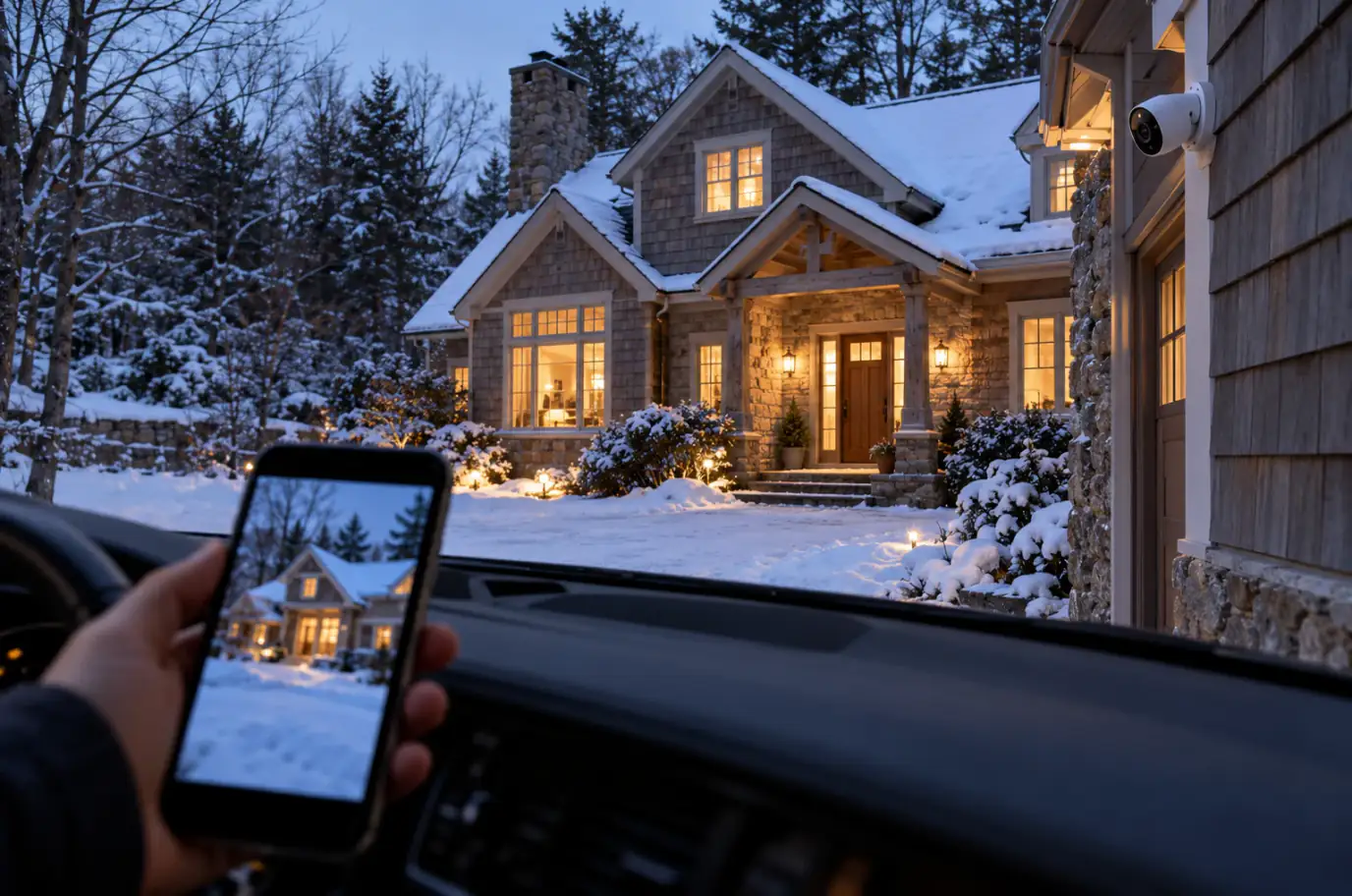
  • Vacation homes — a cellular camera keeps reporting even when the house Wi-Fi/power has failed, which is exactly when you need it; see our second-home monitoring guide.
Wireless security camera covering an area of a Westchester property beyond Wi-Fi range

The Connecticut Winter Reality Check

Here's the honest part the product pages skip. Solar output in a lower-Fairfield January is a fraction of the July number: days are short, the sun is low, and panels spend mornings under snow. What we've learned installing these through New England winters:

  • Oversize the panel. If the spec sheet says 5W suffices, install 10–15W. Winter margin is everything.
  • Mount steep and south-facing. A 45–60° tilt sheds snow and catches low winter sun; a flat panel is a snow shelf.
  • Cold cuts battery capacity. Lithium cells deliver noticeably less below freezing — another reason for panel margin.
  • Turn detection zones down, not off. A camera that re-records every snowfall gust drains itself; tight person/vehicle-only AI zones keep the duty cycle low.

Configured this way, our gate cameras run through winter without a manual charge. Configured optimistically, they die in February.

When Trenched Cable Still Wins

We install both, so no dogma: if the location justifies permanent, continuous recording — trench it. A PoE camera on buried conduit records 24/7 to your local NVR, streams full-time 4K, never worries about sun, and adds zero monthly cost. The trade-off is one-time trenching cost, which on long runs is real money.

Our rule of thumb:

  • Under ~150 ft from the house — run the cable. It's cheaper than people assume and better in every operating dimension.
  • Long runs, rock ledge, finished hardscape, or rented/temporary sites — solar + cellular wins on cost and disruption.
  • Gate systems with power already present (electric gates) — a PoE-over-fiber or point-to-point wireless bridge gives wired quality without a new trench. This is our favorite hybrid.

Top Picks & Getting It Installed

What we recommend and install in 2026:

  • Reolink Go series (4G) — the benchmark for standalone cellular cameras; solid app, SD recording, sensible plans.
  • eufy S4 Solar / SoloCam S340 — best solar Wi-Fi option where signal reaches; dual-lens coverage, local HomeBase storage, no fees.
  • Hikvision solar + 4G kits — professional-grade pole-mount packages for gates and construction sites; integrates with the same NVR ecosystem as your house cameras.
  • Point-to-point bridge + PoE — the pro alternative: a Ubiquiti wireless link beams your network to the gate, powering standard 4K cameras with no cellular plan.

A gate or outbuilding camera done right includes signal survey (cellular strength at the exact mount point), winter-rated panel sizing, tuned AI zones, and integration into the same app as the rest of your system. Book a free property walk-through or call (914) 247-9506 — we'll tell you honestly whether your spot wants solar, cellular, or a cable.

Sources

Need expert advice? Get a free consultation.

Licensed installers in CT & NY — no obligation.

Frequently Asked Questions

Do solar security cameras work through Connecticut winters?

Yes, if sized honestly: install a panel 2–3× the minimum spec, mount it steep (45–60°) and south-facing so it sheds snow, and keep AI detection zones tight so the camera isn't recording constantly. Configured this way, gate cameras run all winter without manual charging.

Do 4G security cameras need Wi-Fi?

No — that's the point. A 4G/LTE camera uses its own cellular data plan (typically $5–15/month), so it works at gates, docks, and outbuildings completely beyond Wi-Fi range, and keeps alerting even if power or internet at the house goes down.

How far from the house can a security camera be?

Wired PoE runs make sense up to about 150 feet (and much farther with fiber or a point-to-point wireless bridge). Beyond that — or across rock ledge and finished hardscape — solar plus cellular is usually the more practical option.

Can intruders defeat a solar 4G camera by cutting power or jamming Wi-Fi?

No. It has its own battery and its own cellular network, so the two classic attacks — cutting power to the house or jamming the Wi-Fi — leave it fully operational. That self-sufficiency is why these cameras became a major 2026 security trend.

About the author

Julio Cabrera

Julio Cabrera

Founder & Lead Low-Voltage Technician

Julio founded Rolo Electronics in 2014 after a decade installing commercial CCTV and structured cabling across Westchester and Fairfield counties. He personally oversees every residential design at Rolo, focusing on hidden cabling, local NVR storage, and contract-free systems for Greenwich, Stamford, and Rye estates.

LinkedIn

Related Articles

Back to all articles
Need help? Text us!