Long tree-lined estate driveway in Connecticut with stone gate pillars and a vehicle approaching

License Plate Recognition Cameras for Connecticut Estate Driveways: A 2026 Guide

Rolo Electronics Team10 min read

Last updated:

Quick Answer — Why LPR Belongs on Estate Driveways

License plate recognition (LPR) cameras read vehicle plates in real time, log every arrival and departure with a timestamped record, and can trigger automations like opening a gate for trusted vehicles or sending a phone alert when an unknown plate appears. For Connecticut estates with long driveways, multiple staff vehicles, and frequent contractor traffic, LPR turns "a car came up the driveway" into "Mrs. Patel's housekeeper arrived at 9:14 AM in the white Highlander she always drives."

The technology that used to be reserved for police cruisers and tolling systems is now available in residential cameras for $700–$2,500 per camera installed. The result: a driveway camera that does not just record video, but actually understands what it sees.

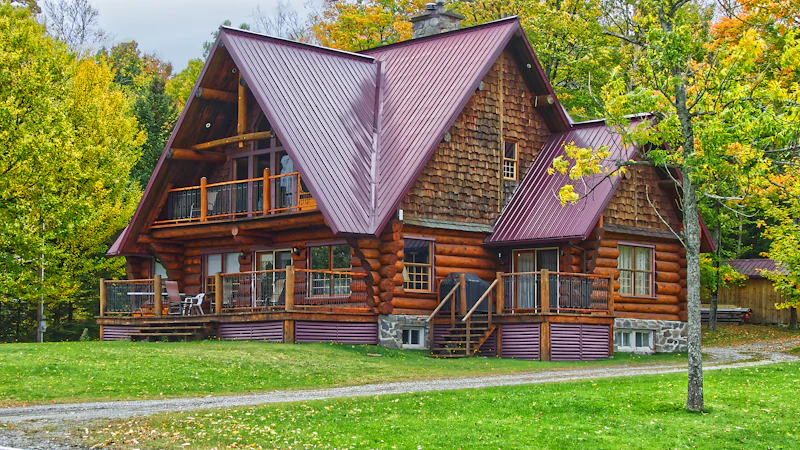
Wrought-iron driveway gate with stone pillars at the entrance to a CT estate

How License Plate Recognition Actually Works

Modern residential LPR cameras combine three technologies into a single device:

  • High-shutter image capture — LPR cameras use a faster electronic shutter than standard surveillance cameras, freezing fast-moving plates without motion blur. This is why a regular 4K camera, even a great one, cannot reliably read plates on moving vehicles.
  • Optical character recognition (OCR) — onboard AI extracts plate characters from the captured image, handling angles, weather, glare, and partial occlusion
  • Allowlist / blocklist matching — the recognized plate is compared against your saved lists in real time. Trusted plates trigger one action (open the gate, suppress alerts), unknown plates trigger another (notify your phone, log to a watchlist)

The best 2026 systems achieve 95%+ recognition accuracy in good light and 85%+ accuracy at night — provided the camera is mounted correctly, with the right field of view, at the right distance, and with appropriate supplemental lighting. Mounting and lighting matter more than raw camera resolution.

Why Estates Benefit Most From LPR

LPR cameras are valuable on any property, but they pay for themselves fastest on estates because of the sheer volume of legitimate traffic that an estate sees:

  • Staff and household vehicles — housekeepers, landscapers, pool service, nannies, drivers — each with their own consistent vehicle
  • Contractor and delivery traffic — multiple weekly visits during any active project
  • Family and guest vehicles — adult children, extended family, frequent overnight guests
  • Long approach lanes — many Greenwich Back Country and Round Hill estates have driveways longer than 500 feet, where a vehicle is on the property for 30+ seconds before reaching the house

Without LPR, every motion alert is the same: "a vehicle arrived." With LPR, the alerts split cleanly — known plates are silent, unknown plates trigger an immediate notification with a snapshot of the plate, vehicle, and driver.

For estates with separate staff and family entrances, LPR also enables automated routing: the staff entrance opens for known service vehicles during business hours and stays locked the rest of the time, with no involvement from the homeowner.

Best LPR Cameras for Residential Driveways

These are the LPR cameras we deploy on Connecticut and Westchester estates in 2026:

  1. Hikvision DeepinView iDS-2CD7A46G0/P-IZHSY — purpose-built LPR camera with onboard AI, 4MP sensor, motorized varifocal lens, and integrated white LED for nighttime plate capture. $900–$1,400 installed. Best balance of price, performance, and feature set for most estates.
  2. Axis P1465-LE-3 License Plate Verifier — Axis's residential-grade LPR camera. Excellent build quality, strong low-light performance, integrates with most modern access systems through ONVIF. $2,000–$2,500 installed. Best when reliability and warranty support outweigh cost.
  3. Dahua ITC237-PW6M-IRLZF1050 — strong residential LPR option with good optics and reasonable cost. $700–$1,100 installed. Best budget option that still meets professional accuracy targets.
  4. Avigilon H5A-LPR — when LPR is part of a larger Avigilon-managed estate system, this is the native choice. $2,500+ installed and typically only specified on properties already on the Avigilon platform.

An important note: avoid generic "4K driveway cameras" marketed with LPR-style screenshots. Without the high-shutter optics and AI, those cameras read plates correctly only when a vehicle is stopped, which defeats the entire purpose.

Professional license plate recognition camera mounted on a stone driveway pillar

Integrating LPR With Driveway Gates

The most powerful use of residential LPR is automated gate control — but only if it is implemented correctly. The wrong setup creates a security gap; the right setup eliminates one.

  • Allowlist-driven opening — recognized trusted plates trigger gate opening. Everyone else uses the call box, keypad, or remote.
  • Time-window restrictions — landscaper plates open the gate only Monday–Friday, 7 AM–5 PM. The same plate at midnight on a Sunday triggers an alert instead.
  • Direction sensitivity — only inbound triggers open the gate; outbound is handled by a loop detector or separate exit camera
  • Manual override — homeowners can always open or close the gate from the app or call box, regardless of the LPR state
  • Fail-secure default — if the LPR camera goes offline, the gate stays closed. Convenience never overrides security.

Most modern gate operators (LiftMaster, FAAC, BFT, Doorking) accept dry-contact or relay inputs that integrate cleanly with the LPR camera or a local gateway. We test the full sequence — recognition, relay close, gate open, log entry — at every install.

Costs and What to Expect

Total project cost for residential LPR on a single driveway, fully installed and integrated:

ComponentTypical CostNotes
LPR camera$700–$2,500Single-direction; double for in/out coverage
Mounting + cabling$400–$1,200Trenched conduit if no existing pull
Supplemental IR/white light$150–$400Required for reliable night reads
NVR/server upgrade$400–$1,200If existing NVR lacks LPR licensing
Gate integration$300–$900Relay module + programming
Configuration + testing$300–$600Allowlist build, schedules, training

Realistic all-in budget: $2,200–$6,500 for a single-direction LPR install, $4,500–$10,000 for full bidirectional coverage with gate integration on a long estate driveway.

Ongoing costs are modest: typical maintenance is one annual cleaning and lens check per camera, and licensed LPR analytics on most platforms run $0–$120/year per camera.

Common Mistakes to Avoid

The five most common LPR install mistakes we see when retrofitting failed DIY systems:

  1. Wrong angle — the camera must be roughly aligned with the direction of travel. A 90° side-on view reads plates only on stopped vehicles. The sweet spot is 15–25° off-axis at the right distance.
  2. Wrong distance and zoom — too far and the plate occupies too few pixels; too close and you only see the plate, not the vehicle and driver. We target a plate height of 25–35 pixels for reliable OCR.
  3. No supplemental lighting — most plates fail at night without dedicated illumination. The camera's own IR is rarely sufficient for reliable nighttime OCR; a discreet white-LED supplement or IR LPR illuminator is usually needed.
  4. Glare from headlights — front plates against oncoming headlights wash out without HDR or WDR specifically tuned for LPR. Most cameras need their LPR-mode profile activated, not the default profile.
  5. No regular allowlist maintenance — the system is only as good as the list. We schedule a 6-month allowlist review with every client to add new staff vehicles, remove former contractors, and verify time windows.

Get a Driveway Site Survey

Every estate driveway is different — slope, curves, gate location, tree canopy, and existing electrical all change the spec. A 30-minute on-site survey identifies:

  • Optimal camera position(s) for plate capture
  • Cabling route and trenching requirements
  • Lighting needs and existing fixture compatibility
  • Gate operator integration options
  • NVR/server placement and capacity check

Book your free assessment:

We serve Greenwich, Stamford, Darien, New Canaan, Westport, and Westchester County estate properties.

Sources

Need expert advice? Get a free consultation.

Licensed installers in CT & NY — no obligation.

Related Articles

Back to all articles
Need help? Text us!