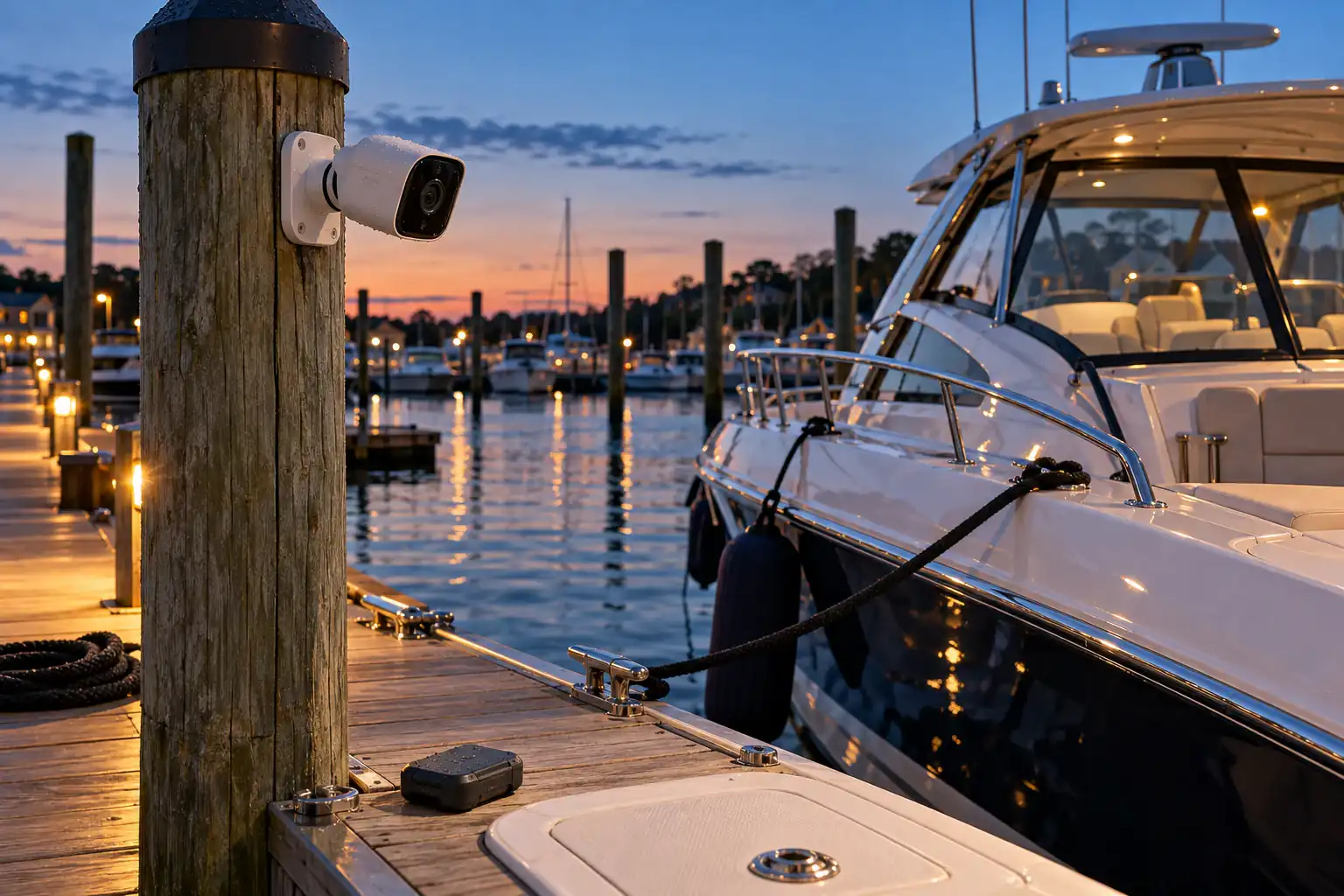
Boats docked at a marina at dusk — the hours when most boat theft and vandalism happens

How to Keep Your Boat Safe at the Dock or Marina: Cameras, Trackers & Remote Monitoring

Julio CabreraFounder & Lead Low-Voltage Technician9 min read

Last updated:

What Actually Gets Stolen (It's Rarely the Boat)

To keep a boat safe when you're not aboard, layer four things: a visible marine-rated camera with AI person detection, 4G connectivity that doesn't depend on marina Wi-Fi, a hidden GPS tracker, and — if you dock at home — a PoE camera on the dock wired to your house NVR. Deterrence does most of the work; documentation does the rest.

Whole-boat theft happens, but the everyday losses along the Long Island Sound coast are smaller and constant: marine electronics (chartplotters, radios, displays unbolted in minutes), outboard motors and props, fuel, fishing gear, and casual vandalism. It's opportunistic, it's after dark, and it targets whatever slip looks least watched.

That last part is the insight the marina security industry repeats: visible surveillance changes target selection. Thieves working a dock line pick the boat with no camera — the entire first goal is to not be that boat.
The Layered Approach to Boat Security

  • Layer 1 — Visible deterrence. A camera in plain sight on the boat or piling, plus a small "video surveillance" decal. Cheap, and it does more than any other single item.
  • Layer 2 — Smart alerts. AI person detection (see how AI detection works) so a body on your swim platform at 2 a.m. pings your phone — but a passing gull doesn't.
  • Layer 3 — Physical hardening. Outboard locks, prop locks, a locked cabin with electronics out of sight, dock lines that require tools to slip.
  • Layer 4 — Recovery tech. A hidden GPS tracker with geofence alerts, and photographed serial numbers for everything worth stealing.

Any one of these can be defeated; together they make your boat the worst-value target in the marina.

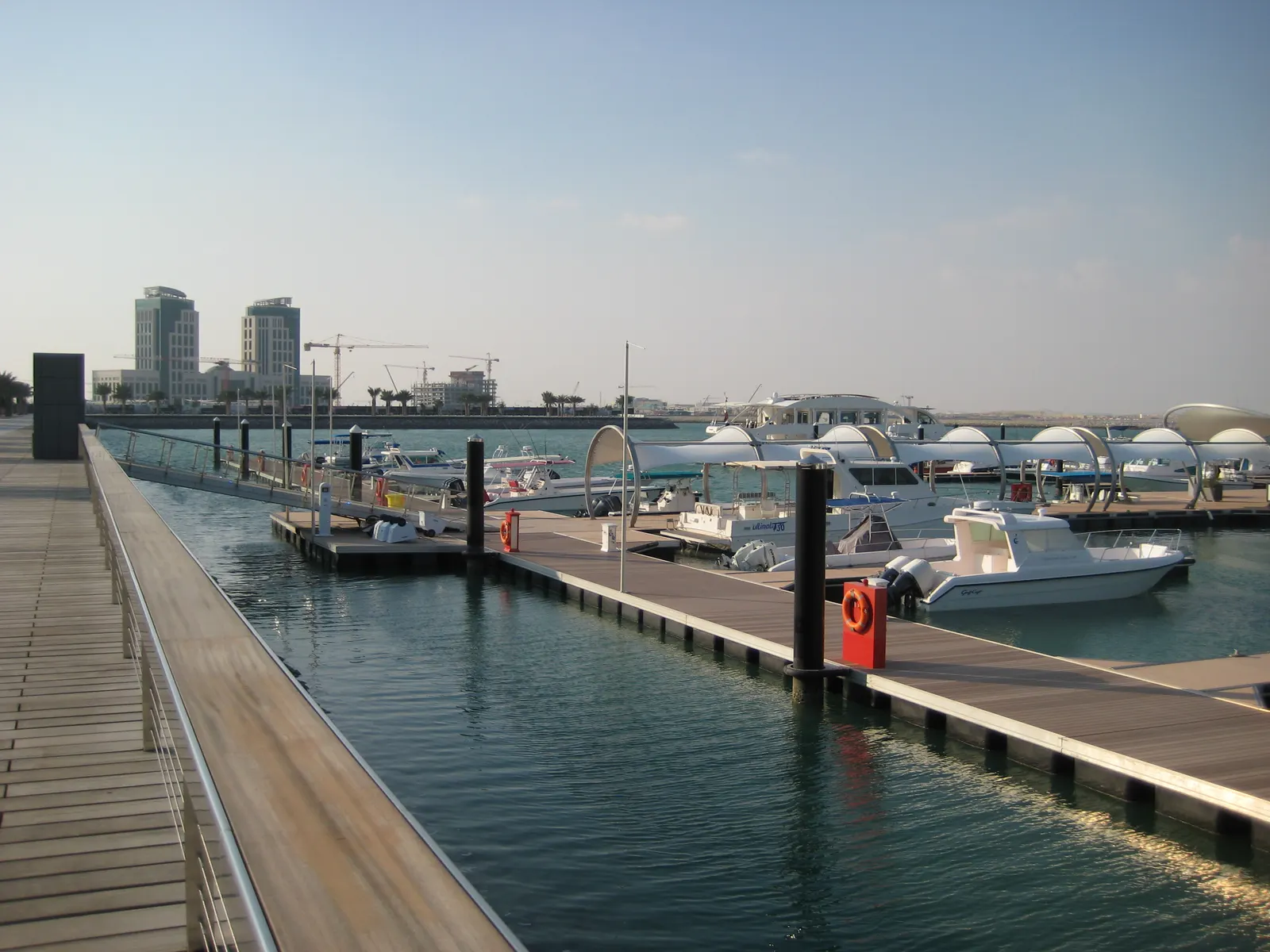
Marina dock with moored boats — visible cameras change which slips thieves target

Choosing Cameras That Survive Salt Water

A porch camera dies fast at a slip. Marine duty means:

  • IP67 or better sealing — spray, rain, and washdowns are constant. IP66 is the floor; IP67 is the standard we spec on docks.
  • Salt-corrosion resistance — stainless hardware and coated housings. Standard galvanized mounts streak rust within one season on the Sound.
  • Wide dynamic range (WDR) — water glare is brutal; WDR keeps faces readable against reflected sun.
  • Good IR night vision — nearly everything worth recording happens after the marina office closes.
  • Battery + solar power — slips rarely offer reliable shore power for accessories; a solar panel on a rail or piling keeps the camera independent.

On the boat itself, small dual-lens battery cameras cover cockpit + companionway from one mount. On a private dock, full-size 4K PoE cameras are the better tool — more on that below.

Connectivity at the Slip: the Real Problem

The camera is easy; the connection is the hard part. Marina Wi-Fi is famously oversubscribed, fades halfway down the dock, and drops exactly when weather rolls in. If your camera can't upload an alert, it's a recorder, not a guardian.

Our order of preference:

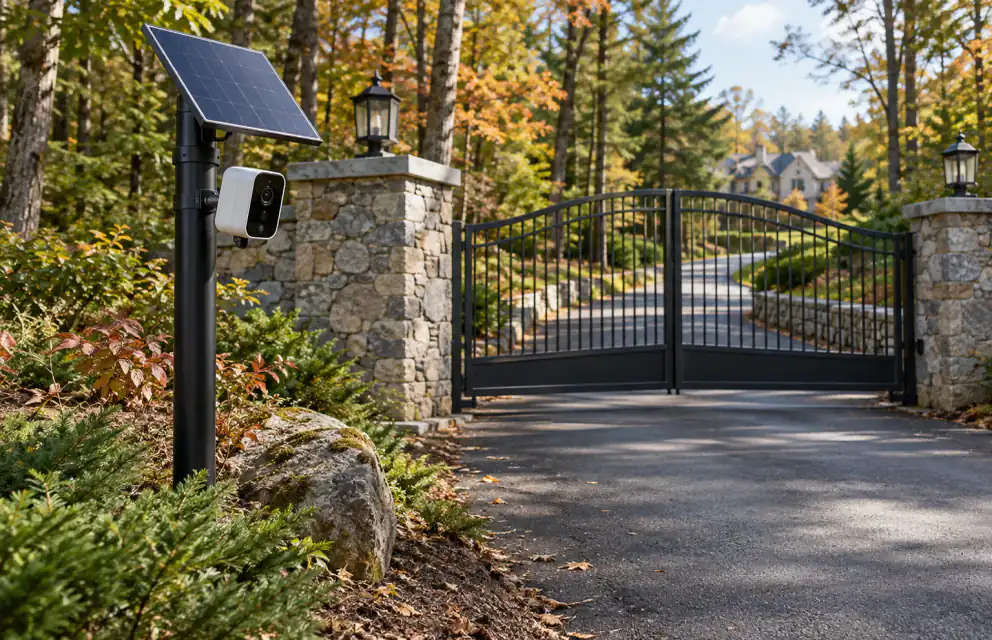
  • 4G LTE cameras — their own cellular connection, independent of the marina entirely. The same self-sufficient setup we use for gates and remote corners of properties: solar panel + LTE radio + on-device AI, alerting anywhere you are.
  • Local recording regardless. SD-card or onboard recording means evidence survives any network failure; the network is for alerts and live view.
  • Marina Wi-Fi as bonus only. Use it when it works, never depend on it.

Monthly data for an event-driven boat camera is modest — the AI only wakes the radio for real activity.

GPS Trackers & Onboard Alarms

Cameras protect the slip; a tracker protects the hull once it moves. A hidden GPS unit (wired into the house battery or long-life standalone) gives you:

  • Geofence alerts — your phone knows the second the boat leaves the mooring field without you
  • Live recovery tracking — the data police actually need, in the window that matters
  • Utility year-round — battery voltage, bilge activity, and shore-power loss alerts from the same devices on many marine monitors

Pair it with simple onboard sensors — a hatch contact and a motion sensor below deck tied to a siren. A 110 dB siren in a quiet marina at 2 a.m. ends most visits immediately, and marina neighbors are the best monitoring service afloat.

The Private Dock Advantage

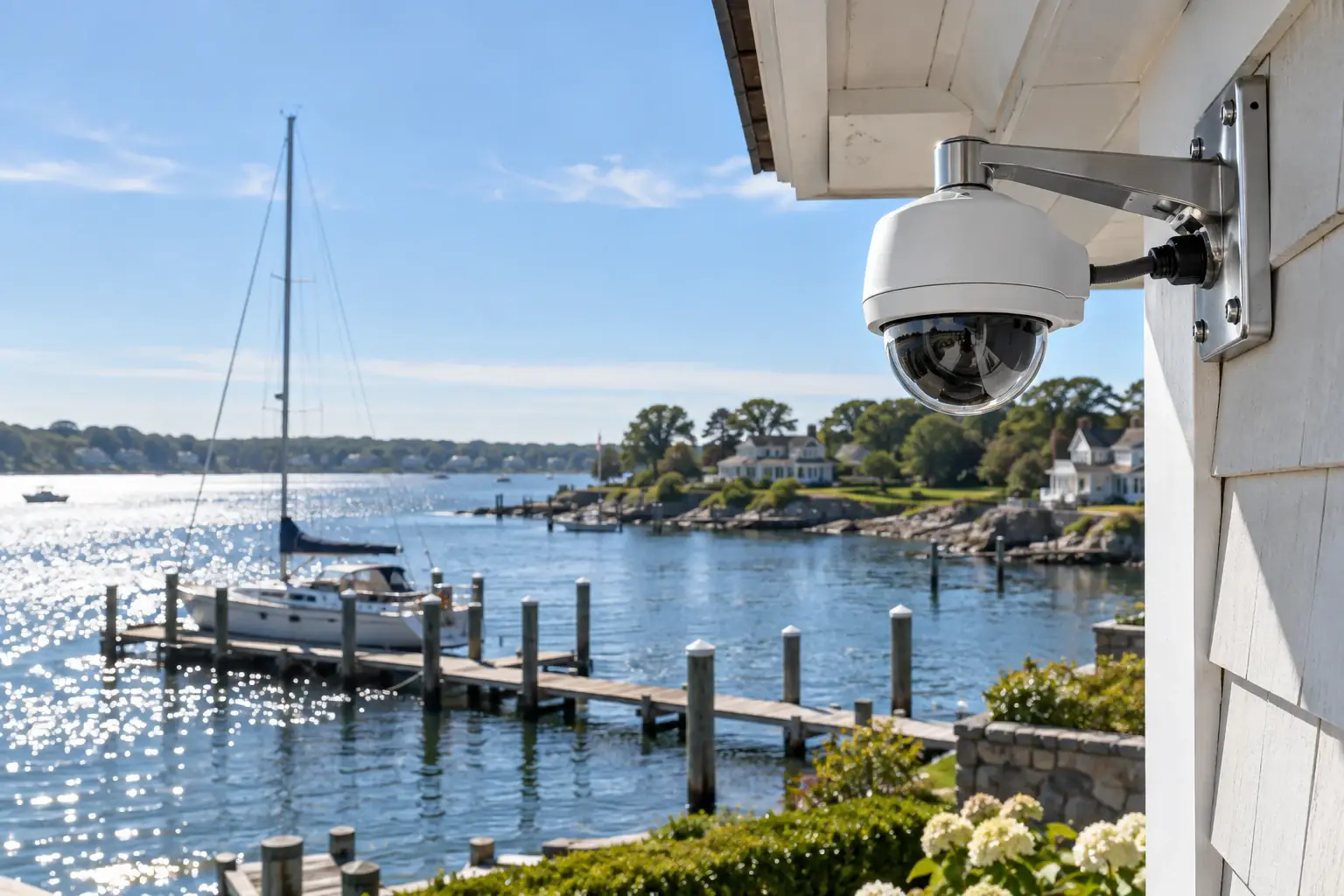
If your boat lives behind your house — common along the waterfront in Greenwich, Riverside, Darien, and Norwalk — you can skip the compromises entirely. A private dock can be wired like the rest of your property:

  • PoE 4K cameras on the dock and boathouse, recording 24/7 to the same no-subscription NVR as your house cameras — no batteries, no data plans, full resolution
  • One app for house, driveway, and dock, with person/vessel alerts
  • Cabling run underground and along the pier with marine-grade conduit — invisible, exactly like our hidden wiring inside homes

We cover the design details for shoreline properties — mounting, glare, tide line, corrosion — in our waterfront camera guide.

Don't Forget Winter Storage

From November to April, most Sound boats sit on stands — in a yard, or shrink-wrapped in your own driveway. Two cheap moves cover the season:

  • In your driveway: aim an existing house camera at the boat, or add one AI camera with a vehicle/person zone around it. Outdrives, props, and electronics disappear from stored boats every winter.
  • In a yard: ask what surveillance actually covers your row (not the gate — your row), keep the GPS tracker aboard, and strip removable electronics home.

Ready to stop wondering what's happening at the slip? Book a free consultation — we'll design camera coverage for your boat, dock, or waterfront property — or call (914) 247-9506.

Sources

Need expert advice? Get a free consultation.

Licensed installers in CT & NY — no obligation.

Frequently Asked Questions

Can I install a security camera on my boat at a marina?

Yes. Battery or solar-powered cameras with 4G connectivity mount on rails or inside the cabin without any marina wiring. Check your marina's rules first — most allow cameras aimed at your own vessel — and choose a model with local SD recording so evidence survives network dropouts.

What weatherproof rating does a boat camera need?

IP67 or better, with stainless or coated hardware. Marine duty means constant spray, washdowns, and salt corrosion — standard outdoor cameras with galvanized mounts start rusting within a season on Long Island Sound.

Why not just use the marina's Wi-Fi?

Marina Wi-Fi is oversubscribed, fades down the dock, and fails during storms — exactly when you want eyes on the boat. Treat it as a bonus and rely on a 4G LTE camera with its own cellular connection plus onboard recording.

How do I protect my boat during winter storage?

If it's on stands in your driveway, aim an existing house camera at it or add one AI camera with a person/vehicle zone — outdrives and electronics disappear from stored boats every winter. In a storage yard, keep your GPS tracker aboard and take removable electronics home.

About the author

Julio Cabrera

Julio Cabrera

Founder & Lead Low-Voltage Technician

Julio founded Rolo Electronics in 2014 after a decade installing commercial CCTV and structured cabling across Westchester and Fairfield counties. He personally oversees every residential design at Rolo, focusing on hidden cabling, local NVR storage, and contract-free systems for Greenwich, Stamford, and Rye estates.

LinkedIn

Related Articles

Back to all articles
Need help? Text us!