Clean finished wall with no visible cables or wiring

Hidden Cable Installation: How We Run Wires in Finished Homes Without Damage

Rolo Electronics Team8 min read

Last updated:

Why Hidden Wiring Matters

We’ve completed over 200 hidden cabling projects in finished homes across Westchester County NY and Fairfield County CT. The #1 concern we hear from homeowners is: “I don’t want cables running along my walls.”

Visible cables are more than an aesthetic problem. They:

  • Reduce property value — prospective buyers notice sloppy cable runs and associate them with poor-quality work
  • Compromise security — exposed cables can be cut by intruders, disabling cameras before they record
  • Violate HOA rules — many communities in Greenwich, Scarsdale, and Rye have strict exterior appearance requirements
  • Look unprofessional — especially in luxury homes where every design detail matters

Hidden cabling solves all of these problems. When we leave, the only evidence of our work is your new, fully functional security or smart home system.

Luxury home interior with clean walls and no visible cables

Professional Tools We Use

Hidden cable installation requires specialized tools that most electricians and handymen don’t carry:

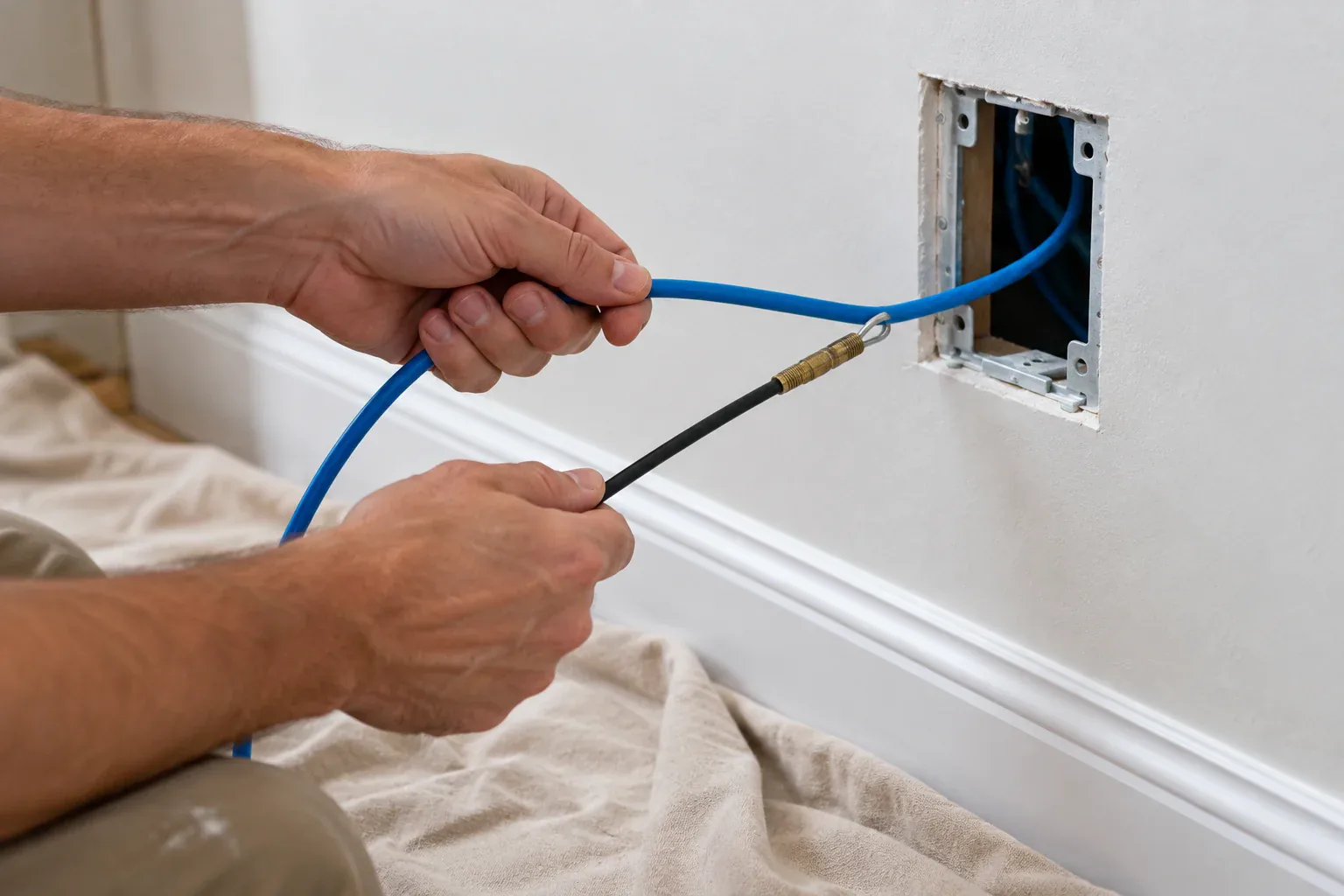
  • Fiberglass fish tape (50–100 ft) — flexible steel or fiberglass strips that we thread through wall cavities to pull cables from one opening to another
  • Glow rods — bright fiberglass segments that are visible in dark wall cavities. We connect them end-to-end to push through attics, ceilings, and long runs
  • Borescope inspection camera — a miniature camera on a flexible cable that lets us see inside the wall before cutting or drilling. We check for existing plumbing, electrical wires, and structural members
  • Magnetic cable puller — two powerful magnets — one inside the wall, one outside — that guide the cable along the correct path between floors
  • Low-voltage old-work brackets — special mounting rings designed for finished walls that hold cables cleanly without damaging drywall
  • Flexible drill bits (54–72 inch) — extra-long flex bits that drill through wall plates and fire stops without removing drywall

Step-by-Step: How Cable Fishing Works

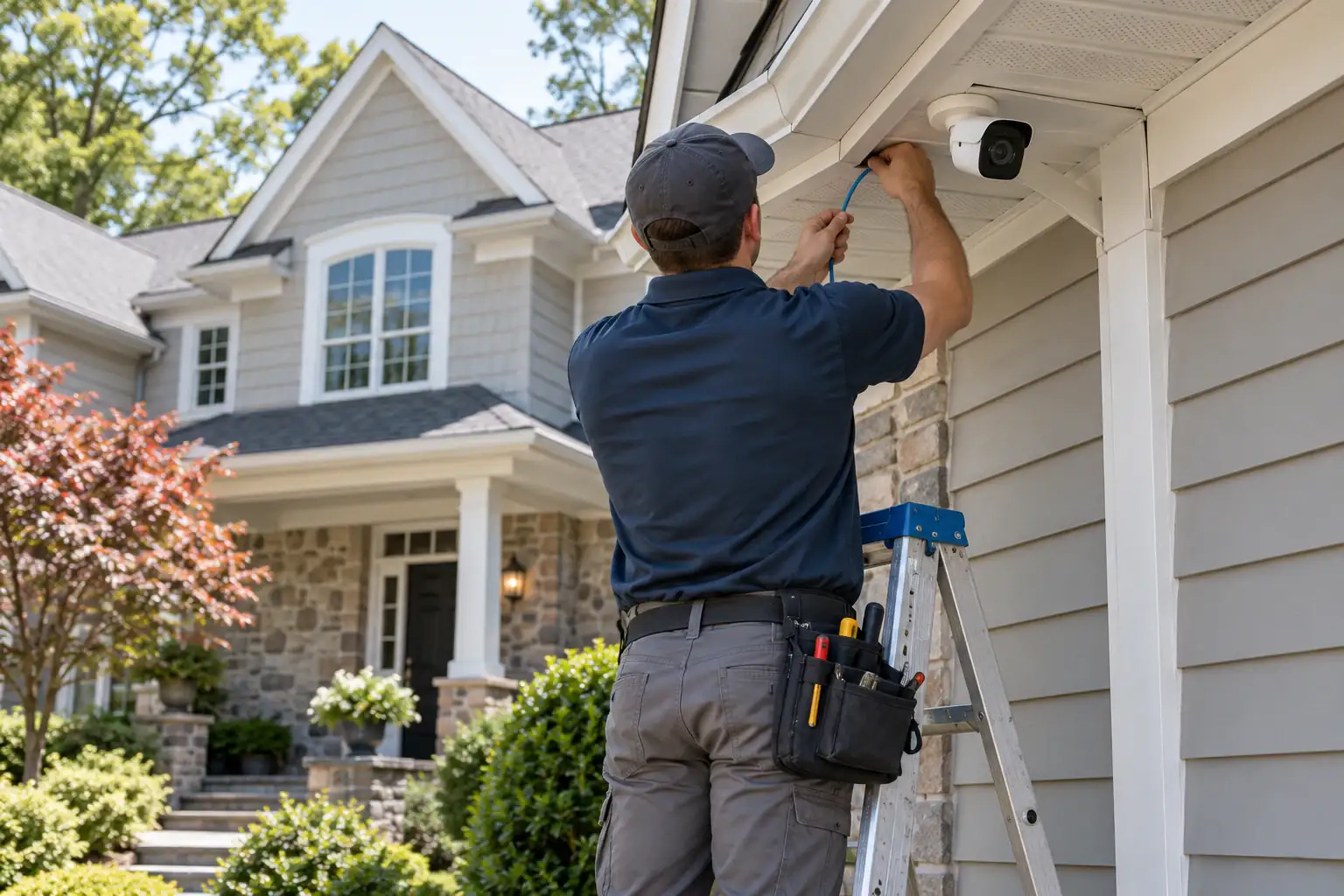
Here’s exactly how we run a cable from an NVR in your closet to a security camera on your exterior wall:

  1. Plan the route — we trace the shortest path through wall cavities, attics, and soffits. We check for obstacles with the borescope before making any cuts.
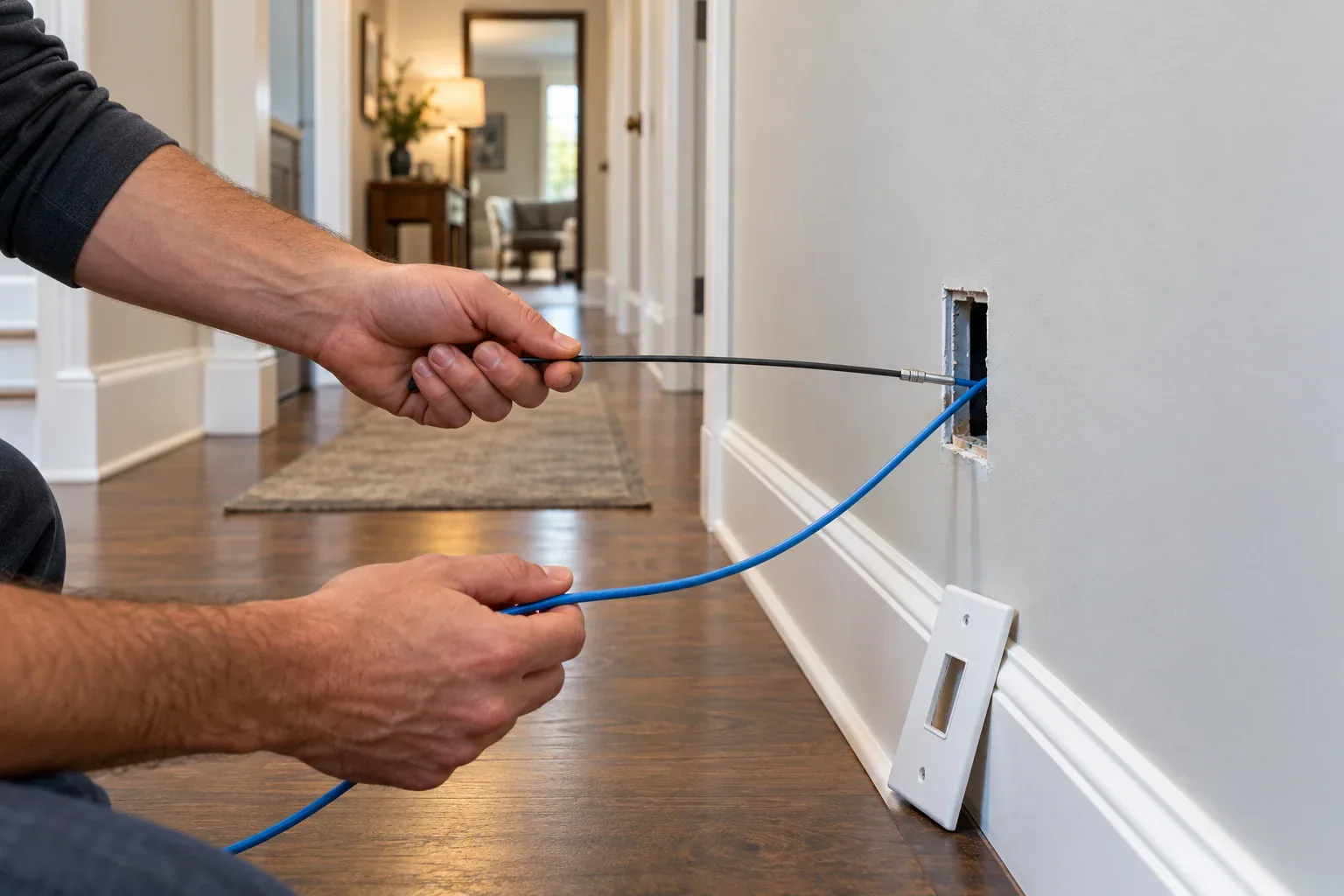
  2. Cut small access points — we cut a small opening (typically 2×4 inches) at the start and end points using a low-voltage bracket template. These openings are hidden behind the camera mount or a wall plate.
  3. Drill through plates — using flexible drill bits, we bore through the top plate (ceiling) or bottom plate (floor) of the wall to access the attic or crawl space.
  4. Fish the cable — we feed fish tape or glow rods through the wall cavity, pulling the cable from one access point to the next. For multi-story runs, we work floor by floor.
  5. Secure and terminate — cables are secured with cable ties at regular intervals, terminated with proper connectors (RJ45 for Ethernet, BNC for coax), and tested for signal quality.
  6. Clean up — all access points are covered with wall plates or hidden behind equipment. We patch any openings that aren’t covered by hardware.

The entire process for a single camera run typically takes 45–90 minutes, depending on distance and wall construction.

Professional technician performing cable installation

Common Challenges in Finished Homes

Not all walls are created equal. Here are the most common challenges we encounter in Westchester and Fairfield County homes:

  • Plaster and lath walls — common in pre-1960s homes in Rye, Larchmont, and Scarsdale. Plaster is harder to cut cleanly than drywall and the lath strips can block fishing access. We use oscillating tools for precise cuts.
  • Fire stops and horizontal blocking — many newer homes have horizontal wood blocks between studs for fire safety. These block vertical cable runs and require drilling through with flex bits.
  • Insulated exterior walls — thick insulation makes it difficult to feel and guide fish tape. We use glow rods with higher stiffness and the borescope to navigate through insulation.
  • Multi-story runs — getting cables from the first floor to the attic in a 3-story colonial requires careful route planning, often using interior closet walls or utility chases.
  • Stone and brick exteriors — drilling through masonry for exterior camera mounts requires hammer drills and waterproof conduit penetrations.

Types of Cables We Hide

Our hidden cabling service covers all low-voltage cable types:

  • Cat6A Ethernet — for security cameras (PoE), Wi-Fi access points, and wired network connections. Supports 10Gbps at up to 100 meters.
  • Cat6 Ethernet — standard networking cable for most residential applications. Supports 1Gbps at up to 100 meters.
  • RG6 Coaxial — for analog CCTV cameras and cable TV distribution.
  • Speaker wire (16/14 AWG) — for in-ceiling and in-wall speakers (Sonos, Klipsch, Polk Audio).
  • HDMI / optical audio — for TV wall mounts and home theater connections.
  • Lutron wiring — for smart lighting controls (Caseta and RadioRA 3 systems).
  • Thermostat wire — for smart thermostat installations (Ecobee, Nest).

Important: We keep low-voltage cabling separated from line-voltage runs wherever possible and cross power at 90-degree angles when needed, following manufacturer guidance and local code practice to minimize interference and service issues.

Why DIY Cable Fishing Is Risky

We get calls every month from homeowners who attempted DIY cable runs and hit problems:

  • Drilling into plumbing — without a borescope, it’s impossible to see what’s behind the wall. We’ve repaired homes where DIY attempts punctured water pipes.
  • Cutting through electrical wires — flex bits can catch existing power cables. A professional checks for live wires before every drill.
  • Drywall damage — frustration leads to cutting larger openings that are difficult to repair invisibly.
  • Dead ends — reaching a fire stop or unexpected blocking mid-run with no backup plan, leaving an unfinished hole in the wall.
  • Signal issues — running low-voltage cables too close to power lines causes interference, resulting in poor camera quality or dropped network connections.

Professional installation costs more upfront but avoids costly repairs and ensures the job is done right the first time.

Do you need to cut drywall to hide security camera or Cat6 cables?

Usually, yes — but only in small, controlled access points that end up hidden behind a wall plate, device, camera mount, or other finished hardware. Clean hidden-cable work is not about avoiding every cut; it is about making only the cuts you can finish invisibly.

Large visible drywall openings are a sign the route was not planned well. In finished homes, the job is won or lost by route planning, not force.

Can you hide Cat6 and camera wires in plaster walls?

Yes, but plaster walls take more care than standard drywall. Older homes in Rye, Scarsdale, Larchmont, and similar areas often need slower drilling, tighter route planning, and more inspection before the first opening is made.

It is absolutely possible to hide Cat6 in plaster homes. The difference is that the labor is higher and the installer needs the right tools and patience to avoid cracking or oversized cuts.

Our No Messy Wires Guarantee

Every Rolo Electronics installation comes with our No Messy Wires promise:

  • Zero visible cables — all wiring is concealed inside walls, ceilings, or soffits
  • No drywall damage — all access points are hidden behind equipment or sealed with matched wall plates
  • Clean exterior mounts — camera cables enter through sealed, waterproofed penetrations
  • 1-year workmanship warranty — covers any issues with cable runs, connections, or mounting

We’ve completed 200+ hidden cabling projects in homes throughout Greenwich, Rye, Stamford, Scarsdale, White Plains, and surrounding areas. Our technicians specialize in the unique challenges of finished, historic, and luxury homes.

Ready for an invisible installation? Schedule a free consultation or call (914) 247-9506.

Need expert advice? Get a free consultation.

Licensed installers in CT & NY — no obligation.

Related Articles

Back to all articles
Need help? Text us!