Connecticut vacation home with stone facade surrounded by autumn trees, no occupants visible

Vacation & Second Home Security in Connecticut: Remote Monitoring Done Right

Rolo Electronics Team9 min read

Last updated:

Quick Answer — Vacation Home Essentials

A reliable Connecticut second-home security system has five layers: smart cameras at every entry plus key interior areas, environmental sensors for freeze and water leaks, smart locks with rotating codes for cleaners and family, professionally monitored intrusion and life-safety alarms, and resilient power and internet (UPS plus cellular backup). Total budget for a typical 4-bedroom Connecticut vacation home runs $4,500–$12,000 installed, with $40–$80/month for professional monitoring.

The single biggest mistake we see on Connecticut second homes: a system designed for an occupied house, then left to run unattended. The detection priorities are different — and so is the resilience requirement.

Stone-and-shingle Connecticut second home with snow on the roof and wooded surroundings

The Risks Unique to Second Homes

For most homeowners, the financial risk profile of a vacation home is dominated by environmental issues, not break-ins. According to the Insurance Information Institute (2025), the largest categories of vacation-home claims are:

  • Frozen pipes and water damage — by a wide margin the #1 second-home claim. A burst supply line can release 200+ gallons per hour into an unoccupied home before anyone notices.
  • Wind, hail, and weather damage — debris impacts, partially detached roofing, and tree falls that go undetected for weeks
  • Theft and vandalism — typically opportunistic, often during predictable absence patterns (school year, off-season)
  • Fire and smoke — including HVAC and electrical fires that grow undetected without 24/7 life-safety monitoring
  • Service failures — septic backups, HVAC freeze-ups, sump pump failures during storms

A second-home security plan that focuses only on burglary leaves the largest exposures uncovered. The right approach is a layered system that watches the building's condition, not just its perimeter.

Cameras for Unattended Homes

Camera priorities for an unattended home differ from a primary residence:

  • Wired PoE over wireless — battery cameras die between visits, and Wi-Fi cameras fail when the router glitches. Wired PoE cameras tied to an NVR are the only fully reliable choice.
  • Local NVR storage — keep recording even when internet is down. Cloud-only systems lose footage during the exact storms that often cause incidents.
  • Interior cameras at key chokepoints — main hall, kitchen, and mechanical room. The interior shot of a contractor working alone is often more useful than another exterior view.
  • Mechanical room camera — pointed at the boiler, water heater, and main shutoff. Many of our clients have caught service issues remotely simply by glancing at this feed.
  • Pre-trigger recording — a 5–10 second pre-event buffer catches what happened just before motion was detected, which is often more important than the motion itself
  • AI-filtered alerts — distinguish people, vehicles, and animals so that snow falling off a roof at 2 AM does not generate 400 phone alerts

For exterior coverage, we follow the same playbook as a primary home — see our 2026 best-camera guide for model specifics.

Environmental Sensors — Freeze, Flood, Smoke

Environmental sensors are the highest-ROI line item on any second-home security plan. A $40 sensor catching a $40,000 water claim is the kind of payoff that justifies the entire system.

  • Freeze sensors at supply lines in unheated bays, attic spaces, and garage — alert at 38–40°F so you can act before pipes freeze, not after
  • Water leak sensors at every water-using appliance: under sinks, behind toilets, at washer hookups, near the water heater, at the sump pump pit, and at the boiler
  • Smart water shutoff valve on the main supply (Phyn Plus, Moen Flo, Streamlabs Control) — automatically closes the main when a leak sensor trips, stopping water damage at the source instead of just notifying you
  • Smoke and CO detectors integrated with the alarm panel — interconnected, professionally monitored detectors trigger fire-department dispatch automatically. Standalone detectors only beep at an empty house.
  • Temperature monitoring at multiple zones — set alerts for low (e.g., below 50°F indoors) and high (e.g., above 90°F), so heating or cooling failures generate early warnings
  • Sump pump monitoring — a high-water alarm and a power-loss alarm on the sump pit. The two combined catch ~95% of basement flooding scenarios.

For Connecticut specifically, freeze and water are the dominant exposures from November through March. We commission these sensors in the fall of every install year and verify them again on the next maintenance visit.

Professional Monitoring vs. Self-Monitoring

The single biggest decision on a second-home plan is whether to self-monitor (you and your phone) or use a professional UL-listed central station. For an unattended property, professional monitoring is almost always the right answer.

  • Self-monitoring assumes you are reachable — if you are on a flight, in a meeting, or out of cell coverage, no one is responding to a fire alarm. A central station never sleeps.
  • Professional monitoring is required for many insurance discounts — most carriers will not credit a system without a UL-listed monitoring contract
  • Police and fire dispatch from a central station is faster than a homeowner-initiated 911 call from out of state — the operator already has the address, contact list, and verified alarm type
  • Verified video monitoring takes it further — central station operators view live camera feeds when an alarm trips and can verify whether police response is needed, dramatically reducing false-alarm fees
  • Cost — typical professional monitoring runs $40–$80/month depending on services. Verified video adds $20–$40/month on top.

For a primary home with an alert homeowner, self-monitoring can work. For an unattended property where a delay of even an hour can mean catastrophic loss, professional monitoring is non-negotiable.

Smart Locks and Codes for Cleaners and Family

Vacation homes typically have far more credentialed visitors than primary residences — cleaners, caretakers, family, friends, contractors, and landscapers. A keyed deadbolt and a hidden spare cannot manage that traffic safely.

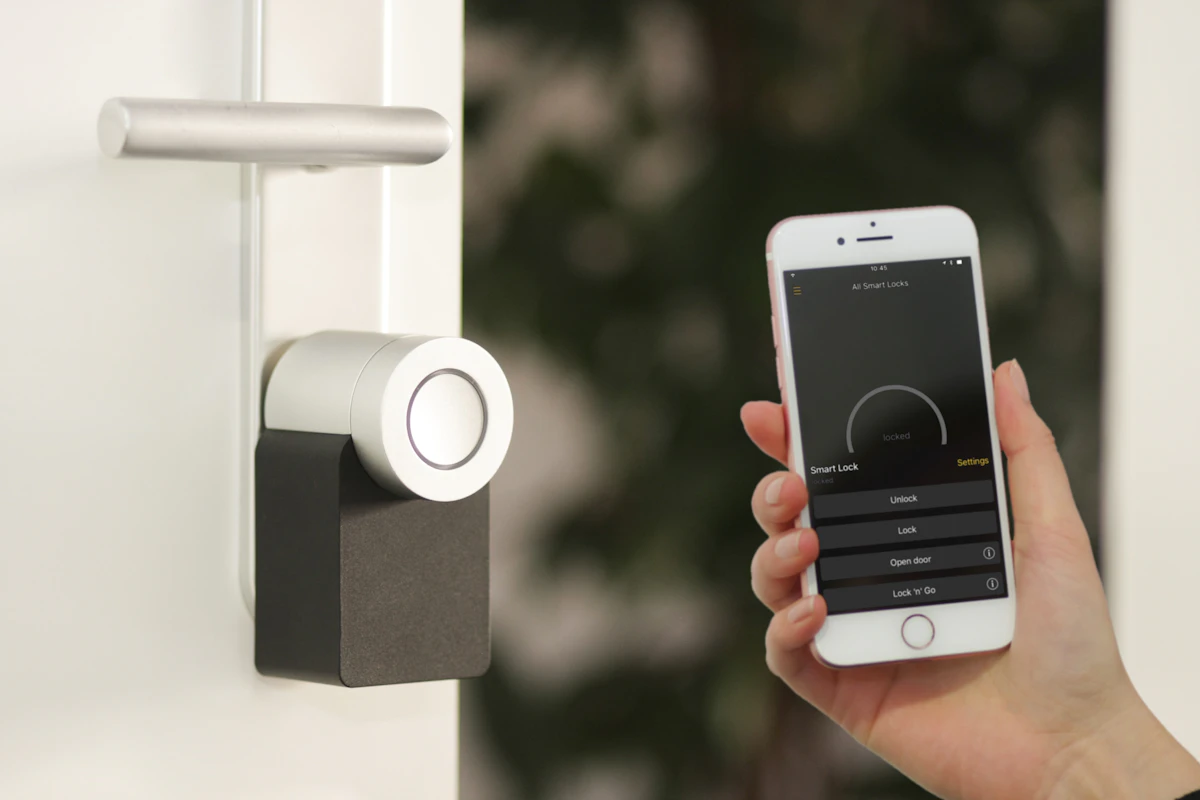
  • Smart locks with per-user codes — give every recurring visitor their own code on their own schedule. A cleaner code that only works Tuesday and Friday 9 AM–noon is automatically off-limits the rest of the week.
  • One-time guest codes for plumbers and one-off contractors — expire after 24 hours so you do not have to remember to revoke them
  • Family codes that survive lock battery changes — store codes in the cloud-backed lock account so a battery swap doesn't wipe access
  • Audit trail of every entry — see exactly which code opened the door, at what time. This alone has resolved more disputes between owners and service providers than any other security feature.
  • Auto-lock with confirmation — if a guest leaves the door ajar, the lock alerts you rather than silently failing

For specific lock recommendations, see our 2026 smart lock buyer's guide.

Power and Internet Resilience

An unattended home cannot afford a single point of failure. The two most common ones are also the easiest to fix:

  • UPS battery backup on the network rack and NVR — minimum 2-hour runtime. Many Connecticut storms cause brief outages that nevertheless reset every device that is not on battery.
  • Cellular backup — a dedicated 4G/5G modem on the alarm panel and the network. When cable internet fails (and it will), the alarm panel still reaches the central station, and critical cameras still upload to the cloud.
  • Whole-house generator integration — homes with a generator should put the alarm panel, NVR, and a pared-down network on the essential circuits panel. We routinely commission this with the generator installer.
  • Surge protection at the service entrance plus point-of-use surge protectors on the rack — Connecticut lightning kills more network gear than any single other cause
  • Monthly health check from the monitoring center — verifies every sensor and the panel are still communicating. A "silent failure" — a system that quietly stops reporting two weeks after the homeowner left — is one of the worst outcomes possible, and proactive supervision prevents it.

What Insurers Want to See

Insurance carriers underwrite second homes with stricter loss-prevention expectations than primary residences. The features that carriers in Connecticut and New York most often credit:

  • UL-listed central-station alarm with intrusion and life-safety zones — typical 5–15% premium credit
  • Smart water shutoff valve — typical 2–8% credit on water-damage exposure, sometimes a deductible reduction
  • Freeze sensors with monitored alerts — varies by carrier, often bundled with the smart-water-shutoff credit
  • Monitored smoke and CO detectors — typical 2–5% credit
  • Documented service contract with an installer who handles ongoing maintenance — some carriers require this on dwelling values above a threshold

Always document the system in writing for your insurer: equipment list, monitoring contract, and annual maintenance log. The same paperwork that earns the discount also speeds claims when something does happen.

Maintenance Schedule for Year-Round Reliability

Set-and-forget is not a strategy for unattended homes. Our recommended cadence:

  • Quarterly — homeowner remote walkthrough. Open the app, view every camera, test one or two sensors, verify all "online" status indicators are green.
  • Semi-annually (spring and fall) — professional service visit. Lens cleaning, gasket inspection, sensor battery replacement, NVR storage health check, firmware updates, and a documented test of every alarm zone with the central station.
  • Annually — full system audit. Review allowlist of users and codes, confirm contact list at the central station is current, walk the property exterior for new line-of-sight obstructions (tree growth especially).
  • Pre-storm protocol — confirm UPS state of charge, generator fuel, and that the cellular backup is registered on the network
  • Post-storm protocol — verify every camera came back online, run a panel test, check sump pump and freeze sensors, review the prior 24 hours of footage for any debris damage

Rolo Electronics offers maintenance plans tailored to second-home properties. The fall and spring visits are timed to the seasons that drive Connecticut's worst loss exposures.

Schedule a Vacation-Home Security Audit

Every second home is different — different layout, different occupancy pattern, different access list, different exposure to weather and wildlife. A 45-minute on-site audit covers:

  • Existing system condition and gaps
  • Environmental sensor placement (freeze, water, temperature)
  • Camera coverage with realistic line-of-sight assessment
  • Access management plan for cleaners, contractors, and family
  • Power and internet resilience review
  • Insurance-credit checklist with documentation

Book your free assessment:

We serve second homes throughout Connecticut and Westchester County, including coastal, lakefront, and rural properties.

Sources

Need expert advice? Get a free consultation.

Licensed installers in CT & NY — no obligation.

Related Articles

Back to all articles
Need help? Text us!