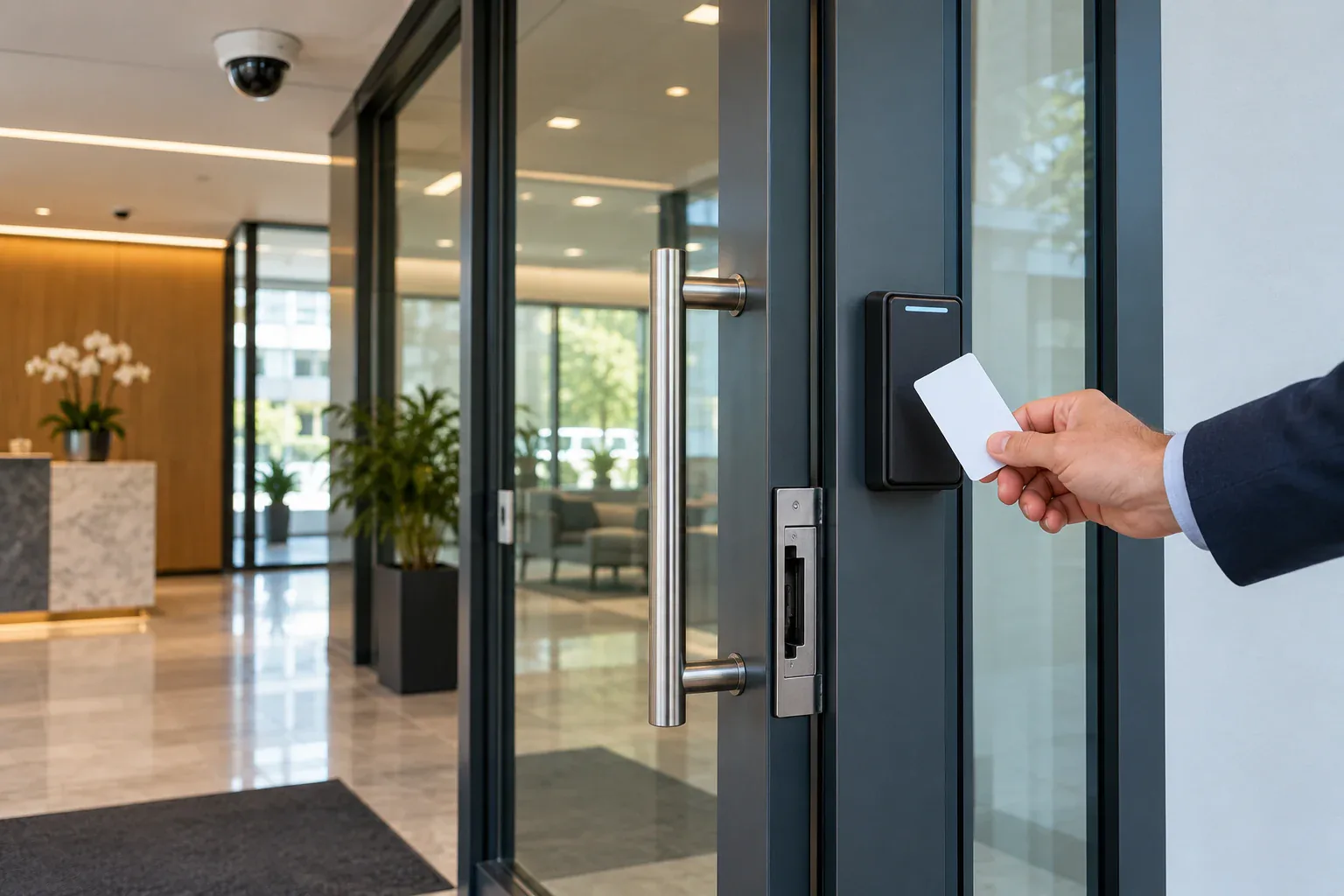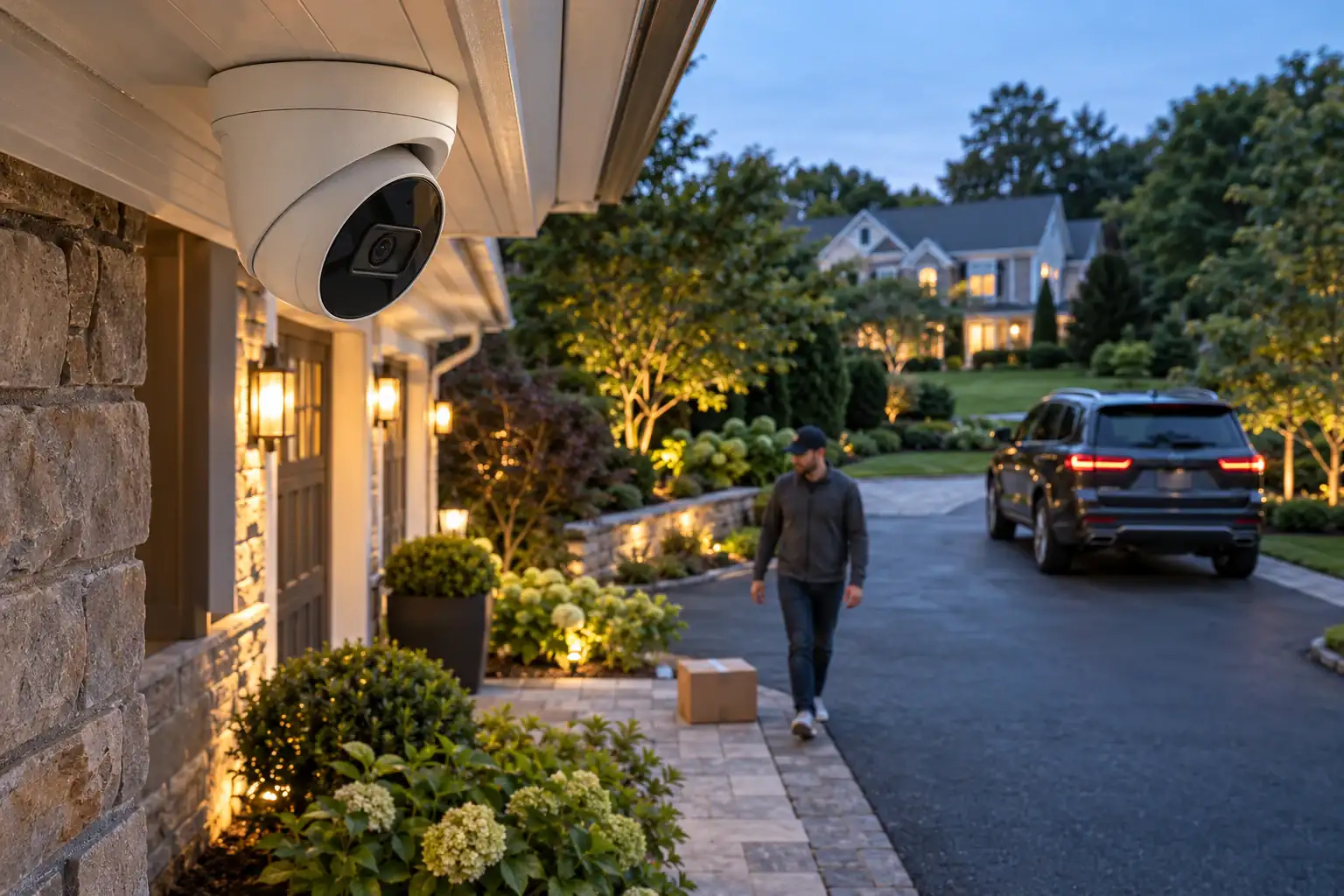
AI security camera with on-device person and vehicle detection mounted on a modern building

AI Security Cameras Explained: Person, Vehicle & Package Detection Without the False Alerts

Rolo Electronics EditorialField-tested by certified installers8 min read

Last updated:

What AI Detection Actually Is

AI security cameras use onboard neural processors to classify what triggered motion — a person, vehicle, animal, or package — instead of alerting on every pixel change. In 2026, this runs on the camera itself (edge AI), so it works without a cloud subscription and alerts arrive in under a second.

Classic motion detection compares one video frame to the next: anything that changes — headlights sweeping a wall, a branch in the wind, rain on the lens — becomes an "event." AI detection adds a recognition step: the camera runs each event through a trained model and only flags the categories you care about.

The practical difference is night and day. Instead of 60 junk notifications, you get three that matter: "Person at the front door," "Vehicle entered the driveway," "Package delivered."
Edge AI vs. Cloud AI: Why It Matters in 2026

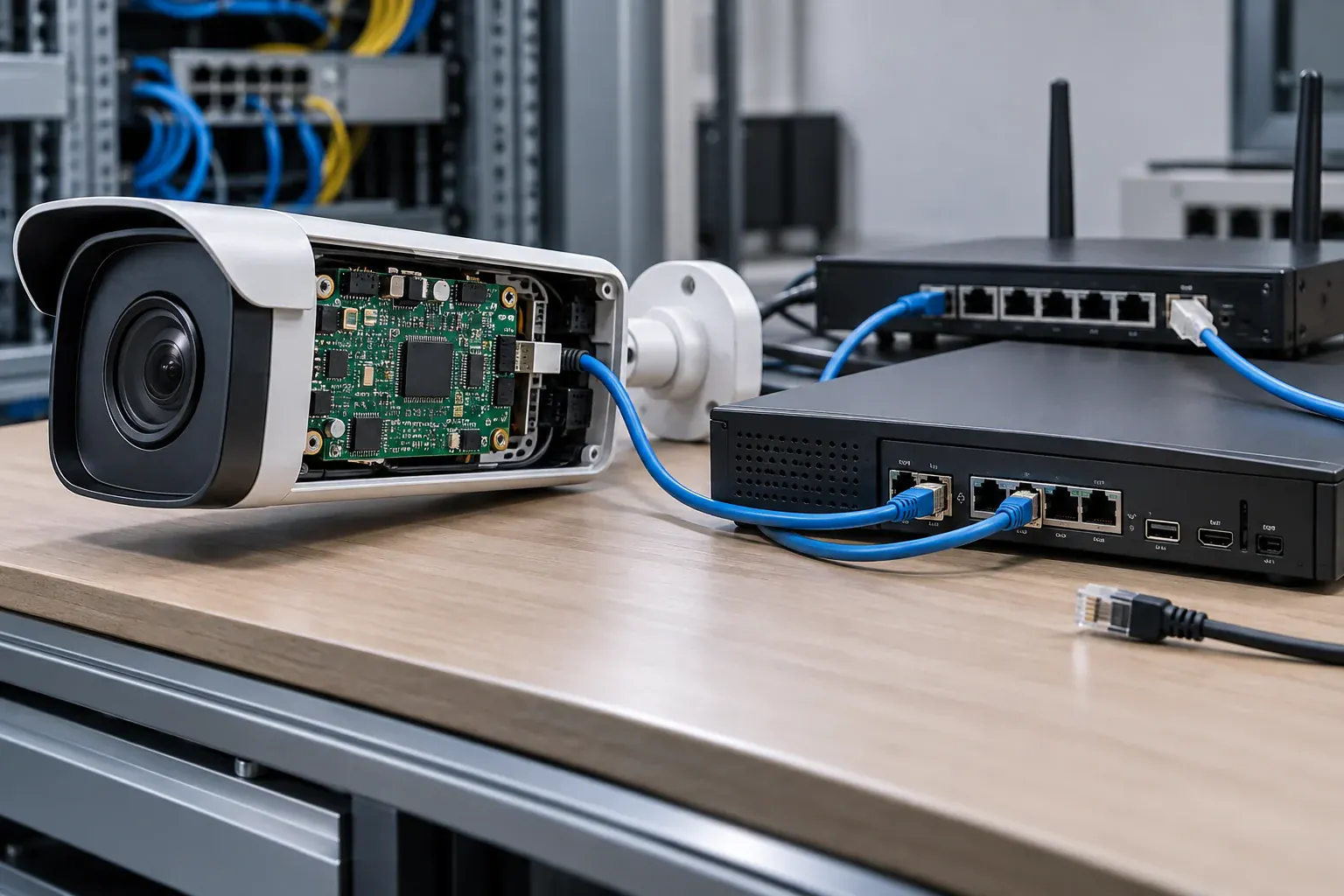
Until recently, the AI lived in the cloud: your camera uploaded video, a server analyzed it, and you paid a monthly fee for the privilege. The 2026 generation of cameras moved that work onto onboard neural processing units (NPUs) — a shift the industry calls edge computing.

Why edge AI wins for homeowners:

  • No subscription. The intelligence is in hardware you own, not a service you rent. Pairs perfectly with a no-monthly-fee camera system.
  • Faster alerts. No round-trip to a data center — detection happens in milliseconds, on the pole.
  • Privacy. Your video is analyzed on your property. Nothing streams to a third-party server for processing.
  • Works during outages. If your internet drops, detection and local recording continue uninterrupted.
Monitoring dashboard showing AI-classified security camera events by person and vehicle

Person, Vehicle, Animal, Package: What Each Mode Does

  • Person detection — the workhorse. Flags human shapes day or night, including partial views (someone crouching behind a hedge). This is the alert you route to your phone with sound on.
  • Vehicle detection — knows cars, trucks, and motorcycles. On driveway cameras it pairs with license plate recognition to log exactly which vehicle came and went.
  • Animal detection — in lower Fairfield County this is the sanity-saver: deer, foxes, raccoons, and coyotes trigger the majority of overnight motion on unfiltered cameras.
  • Package detection — recognizes a box appearing (delivery) and disappearing (pickup — or theft). The foundation of any porch-piracy defense.

Premium 2026 models add face recognition for family members and dual-lens designs that track a subject across a 180° panorama — useful on large properties where one camera covers what used to take three.

The End of False Alerts

False alerts aren't just annoying — they're dangerous, because they train you to ignore your own security system. When every headlight and squirrel buzzes your phone, the one notification that's an actual intruder gets swiped away with the rest.

A properly configured AI camera changes the psychology: every alert is worth looking at. Our clients typically go from dozens of notifications a day to a handful a week, each one a real person or vehicle on their property.

Two configuration details make the difference between "AI-capable" and "actually quiet":

  • Detection zones — the camera should ignore the street, the neighbor's driveway, and the flag on your porch. Alerts fire only inside lines you draw.
  • Per-zone rules — person alerts 24/7 at the doors; vehicle alerts only at the driveway; everything else logged silently to the NVR for review if needed.

Which Brands Do AI Well (With and Without Fees)

Brand / lineAI runsDetectsMonthly fee
Hikvision AcuSenseOn camera/NVRPerson, vehicleNone
Dahua SMD 4.0On camera/NVRPerson, vehicleNone
eufy (HomeBase 3)On hubPerson, pet, vehicle, faceNone
RingCloudPerson, package, vehicleFrom $3.99
Arlo SecureCloudPerson, package, animal, vehicleFrom $12.99

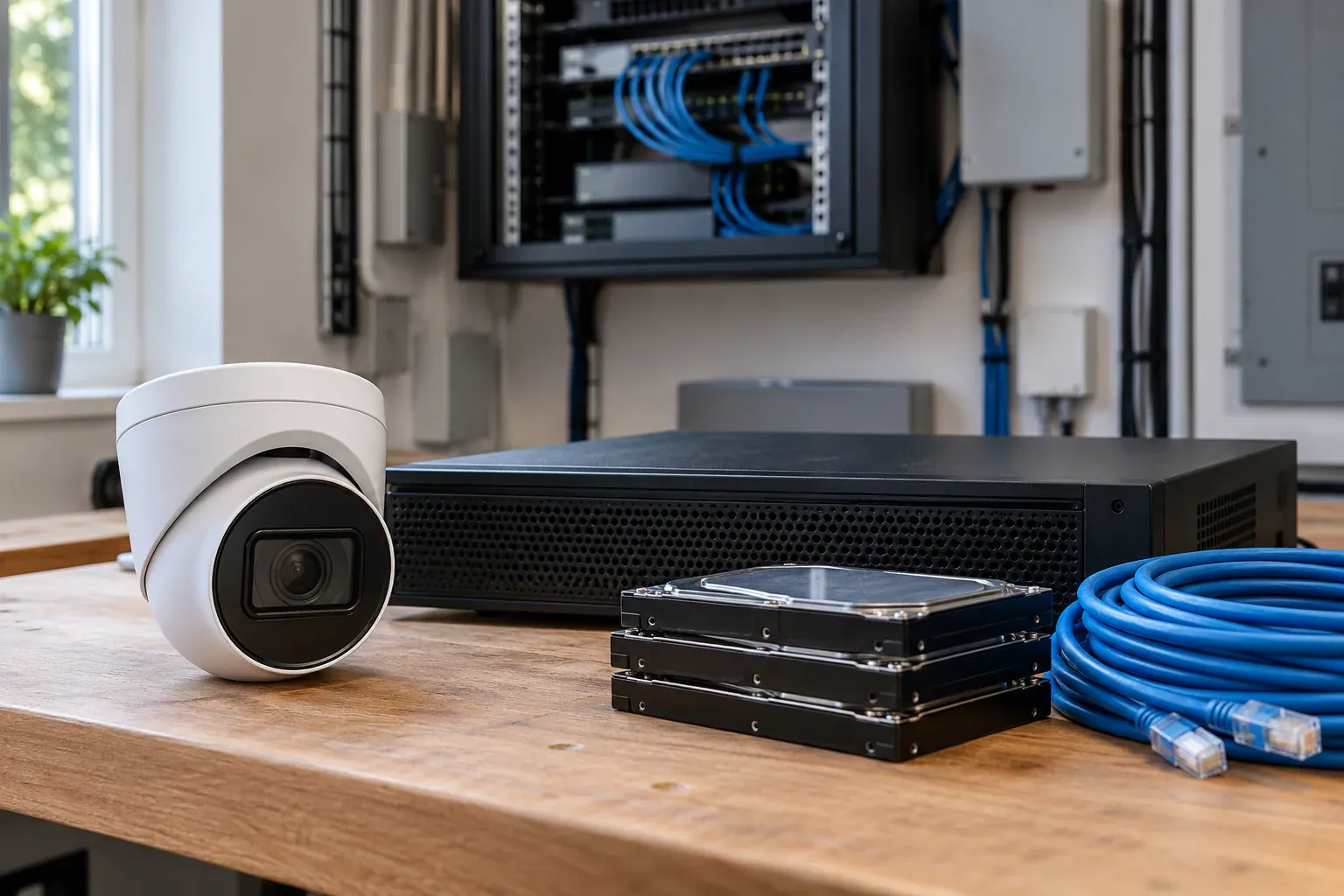
Our default recommendation for whole-property coverage: AcuSense or SMD cameras on a local NVR — professional-grade AI with zero fees — with a Ring or Arlo doorbell at the front door if you want its app conveniences. More detail in our 2026 camera roundup.

Getting Detection Zones Set Up Right

Hardware is half the job. The install visits where we replace an existing "dumb" system, the cameras are usually fine — the configuration was never finished. Our AI setup includes:

  • Site-mapped camera angles so detection zones cover approach paths, not the street
  • Per-camera person/vehicle/package rules with sensible schedules
  • Alert routing to every family member's phone, with quiet hours
  • 30+ days of NVR history so anything the AI logged silently can be reviewed

Book a free assessment or call (914) 247-9506 and we'll show you what modern detection looks like on your own driveway.

Sources

Need expert advice? Get a free consultation.

Licensed installers in CT & NY — no obligation.

Frequently Asked Questions

Do AI security cameras require a subscription?

Not if the AI runs on the camera. Hikvision AcuSense, Dahua SMD, and eufy HomeBase process person, vehicle, and package detection on-device with no fees. Ring and Arlo run their AI in the cloud, which requires a monthly plan.

Can AI cameras tell the difference between family members and strangers?

Premium 2026 models with face recognition can. eufy's HomeBase 3 and several professional lines learn familiar faces locally, so you can receive alerts only for unknown people while family comes and goes silently.

Do AI detection features work at night?

Yes. Person and vehicle classification runs on infrared and full-color night vision footage. Full-color models (like Hikvision ColorVu) give the AI more detail to work with, which improves nighttime accuracy.

Is AI video analysis a privacy risk?

Edge AI is the privacy-friendly option: analysis happens on hardware inside your home, and footage never leaves your property for processing. Cloud AI cameras upload video to remote servers, which is worth weighing for indoor cameras especially.

About the author

Rolo Electronics Editorial

Field-tested by certified installers

Reviewed and fact-checked by Rolo Electronics' lead technicians, drawing on 500+ residential and commercial installations across Connecticut and New York.

LinkedIn

Related Articles

Back to all articles
Need help? Text us!