There are five main types of access control systems, each suited to different security needs and budgets:
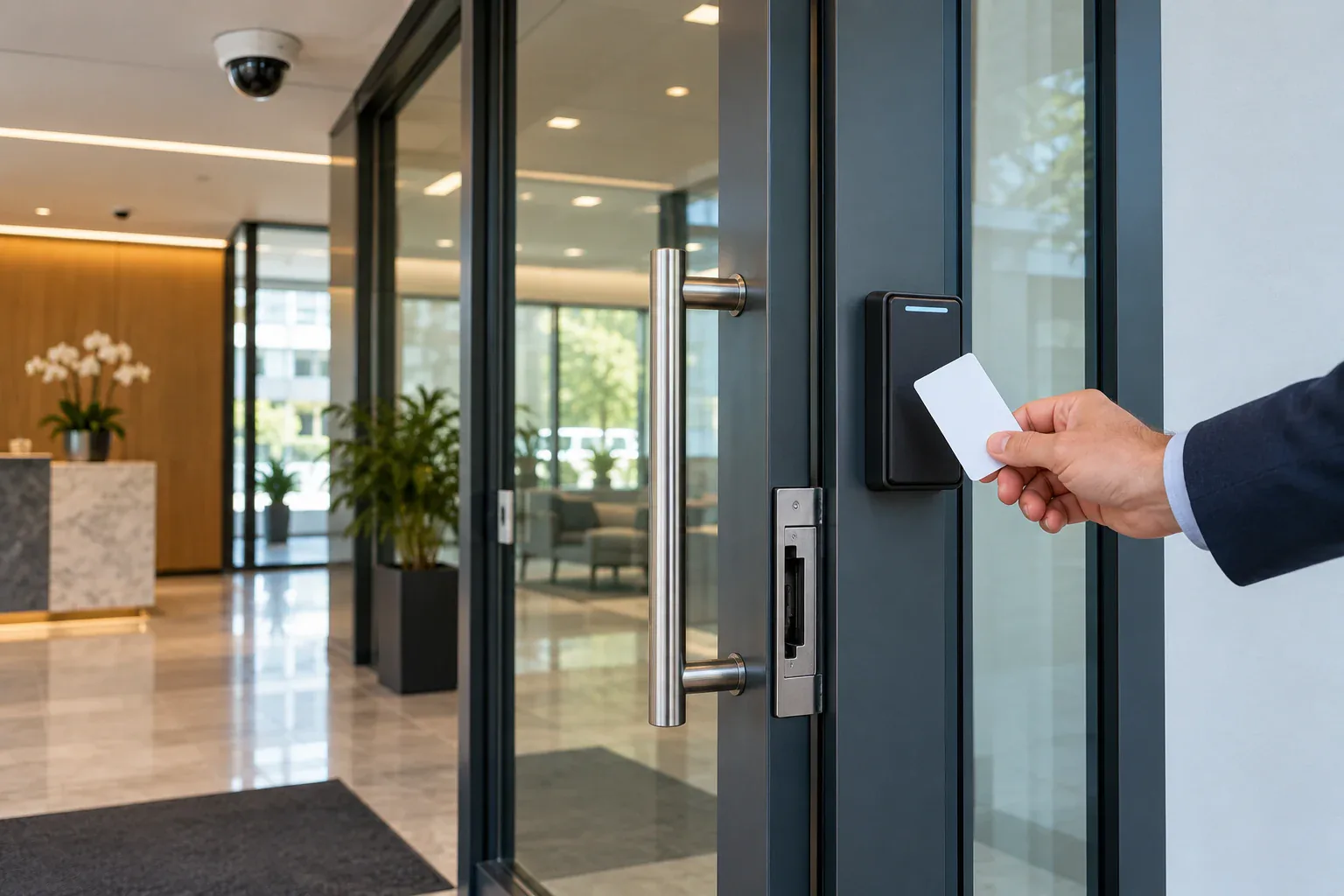
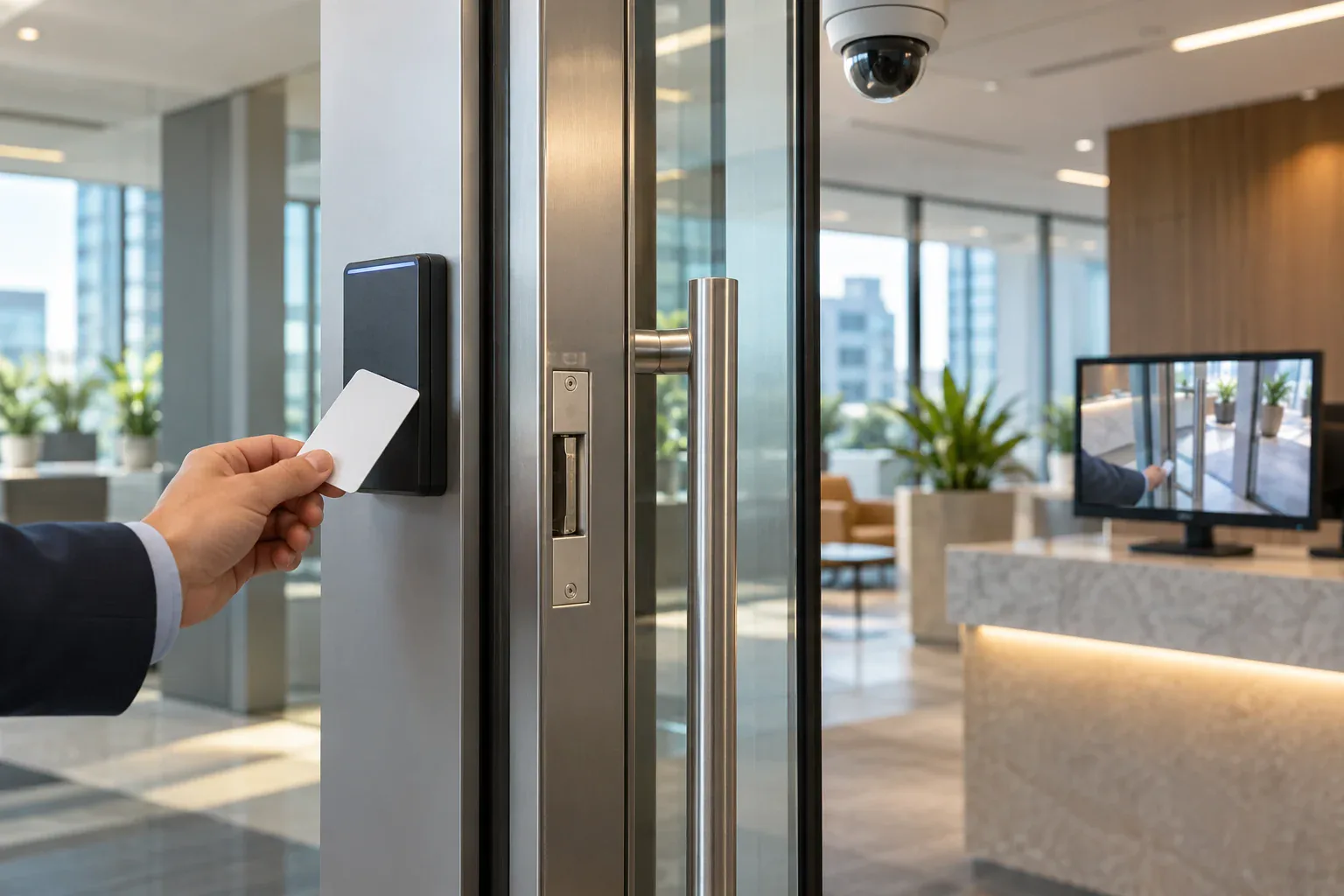
1. Keycard/Fob Systems
The most common solution for offices. Employees tap an RFID card or key fob on a reader to unlock doors. Hardware cost: $200–500 per door.
- Pros: Easy to use, inexpensive, familiar to employees
- Cons: Cards can be lost, stolen, or shared between employees
2. PIN/Keypad Entry
Employees enter a 4–6 digit code on a keypad. Best for low-security areas like storage rooms or break rooms.
- Pros: No physical credential needed, simple to set up
- Cons: Codes can be shared or observed, less secure than other methods
3. Mobile Access (Bluetooth/NFC)
Employees use their smartphones as credentials via Bluetooth or NFC. Best for modern, tech-forward workplaces.
- Pros: No cards to lose, revoke instantly via software, employees always have their phone
- Cons: Requires employees to have a smartphone, Bluetooth range can cause false reads
4. Biometric (Fingerprint/Face Recognition)
The highest security option. Best for server rooms, laboratories, medication storage, and high-value inventory areas. Hardware cost: $800–2,000 per reader.
- Pros: Credentials cannot be shared, lost, or stolen—they’re part of the person
- Cons: Higher cost, privacy considerations, some employees may have concerns
5. Multi-Factor Authentication
Combines two or more methods (card + PIN, mobile + fingerprint) for the highest security. Best for high-security areas where compliance mandates it.