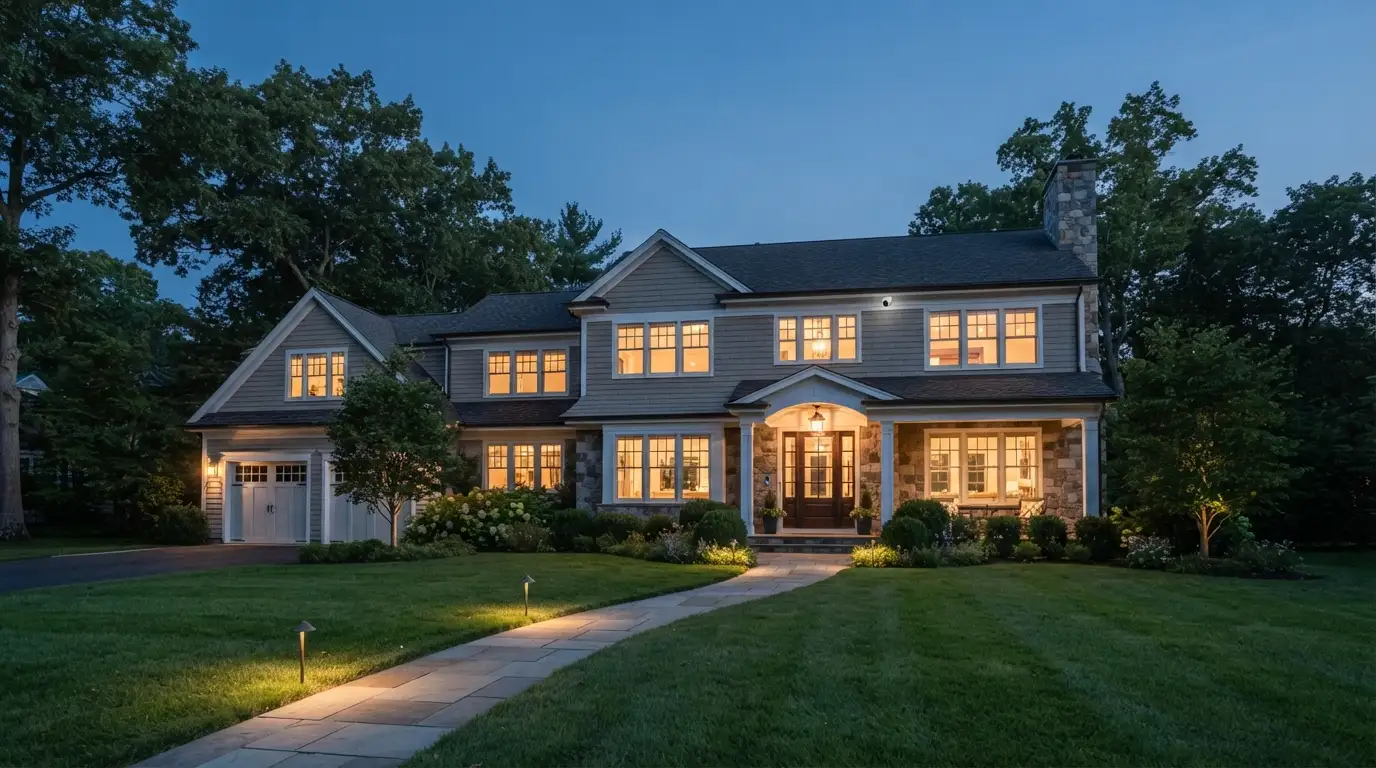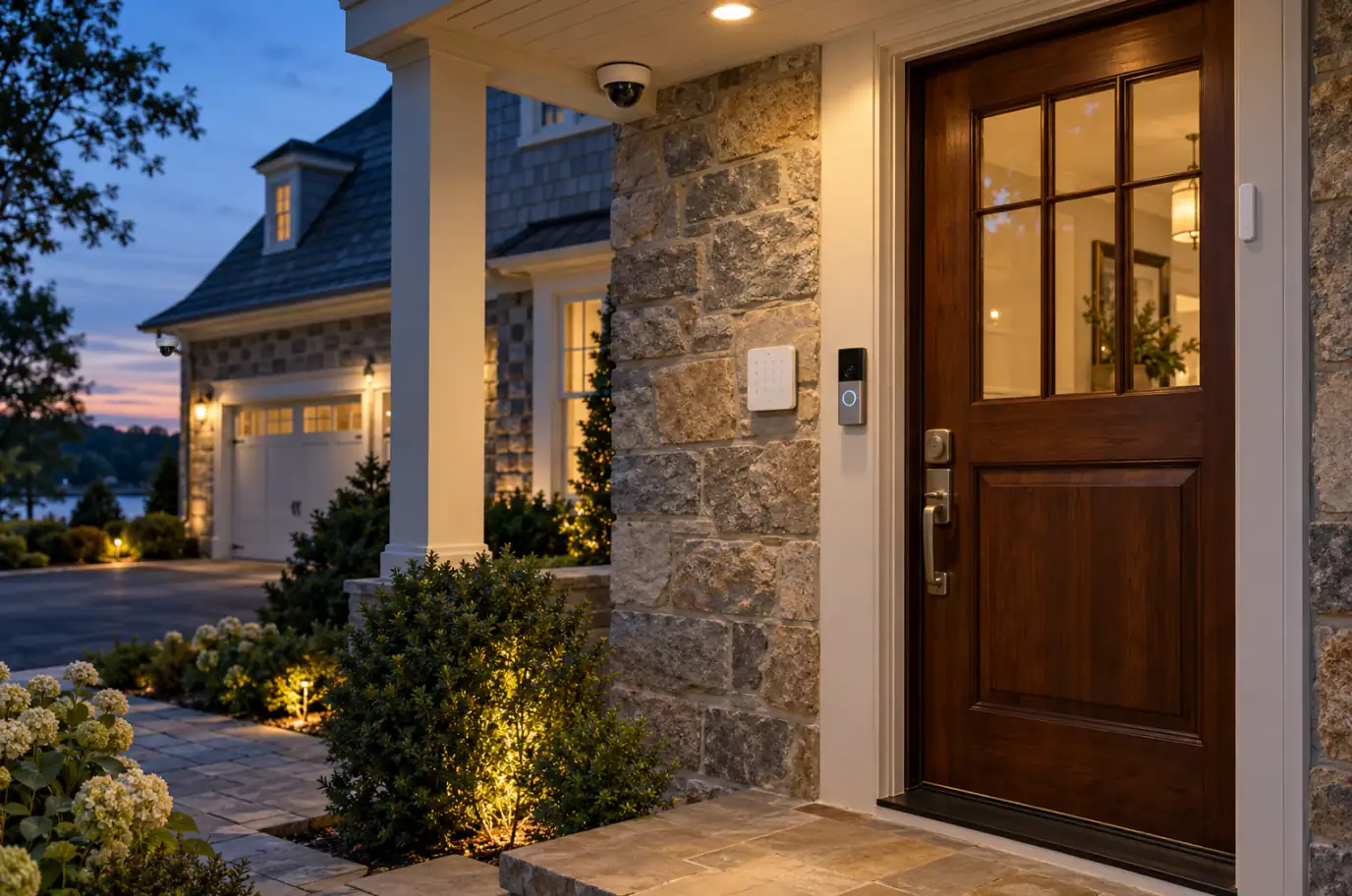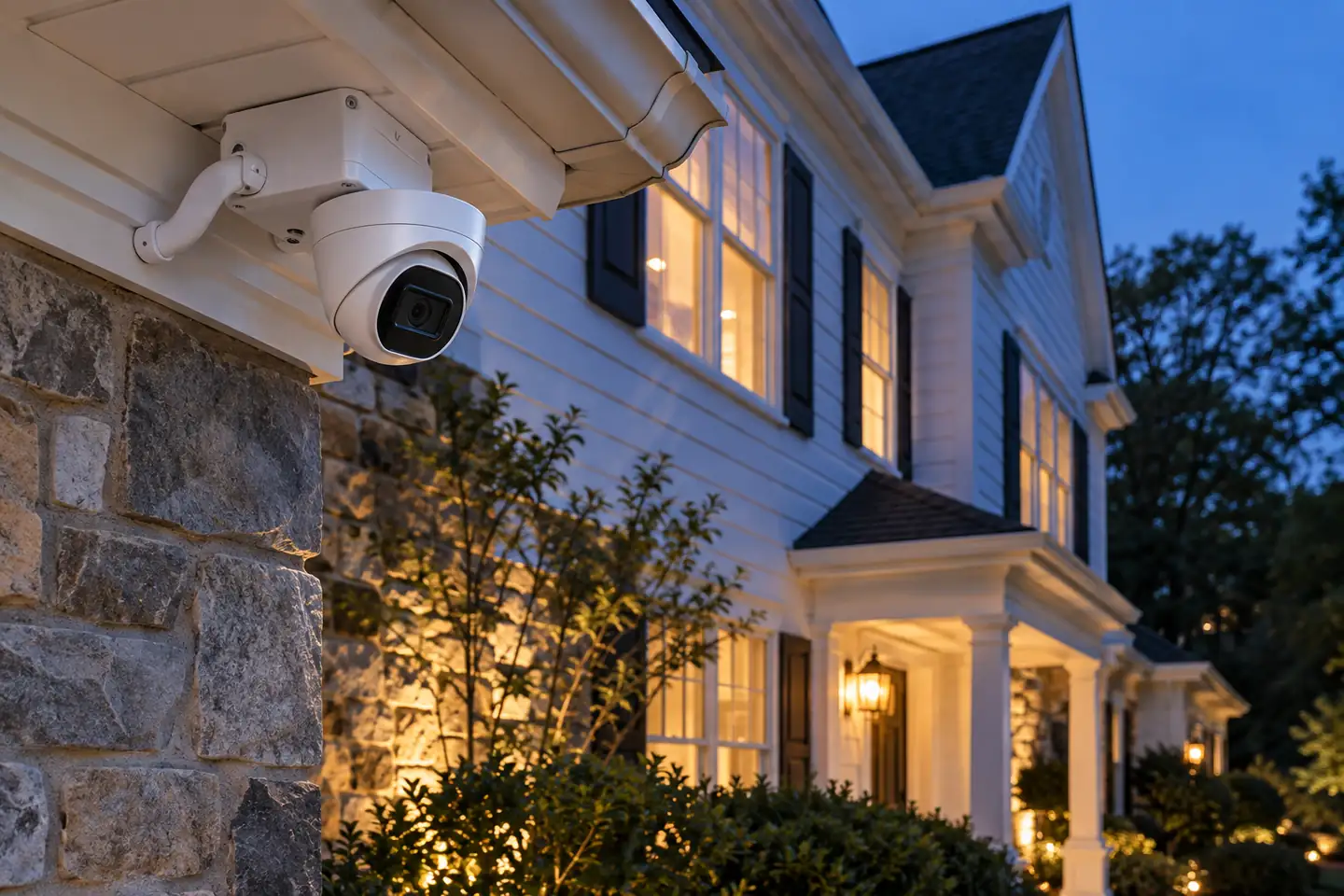
Hard-wired security camera mounted beneath the eaves of a two-story Connecticut home with illuminated upstairs windows at dusk

Can Burglars Disable Your Security Cameras? Wi-Fi Jammers, Cut Power & the Second-Floor Gap

Julio CabreraFounder & Lead Low-Voltage Technician8 min read

Last updated:

Can Burglars Really Disable Security Cameras?

Yes, but mostly systems with a single point of failure. Wi-Fi cameras can be knocked offline by jammers, cloud-only cameras lose footage when the power or internet is cut, and alarms that only protect the ground floor leave the bedrooms open. Wired PoE cameras recording to a locked, battery-backed NVR, plus armed upper-floor glass-break sensors, close all three gaps.

Organized burglary crews increasingly plan around security systems instead of simply avoiding them. In May 2026, authorities in the Los Angeles area arrested seven suspects tied to burglary rings that used Wi-Fi jammers and hidden cameras disguised in boxes wrapped in artificial turf. Los Angeles County Sheriff Robert Luna's advice afterward was blunt: "Hard-wired security systems are highly favorable to wireless ones, as wireless networks can be easily disrupted by high-tech WiFi jammers."

Closer to home, the pattern looks different. In Greenwich and New Canaan, police have spent years warning about crews that strike in the evening and climb to second-floor windows, where many alarms have no sensors. And in July 2024, a Scarsdale homeowner found a hidden camera tucked in the bushes and pointed at the house, a scouting tactic police tied to an organized burglary group.

None of the 2025–2026 Westchester or Fairfield County police reports we reviewed describe a jammer, so this isn't a reason to panic. It is a reason to check whether your system has an easy off switch. Below: each attack, how it works and what stops it.

How Wi-Fi Jammers Beat Wireless Cameras

Most wireless cameras and video doorbells, whatever the brand, send their alerts and video over your home Wi-Fi. Anything that overwhelms that radio link silences them.

Jammers vs. "deauthers"

There are two kinds of attack, and they need different defenses:

  • Radio jammers flood the Wi-Fi frequencies with noise, so no device can communicate. No password or setting stops this; only taking the camera off radio does.
  • Deauthentication attacks ("deauthers") send fake disconnect messages that knock cameras off the network over and over. These are blocked by Protected Management Frames, which the WPA3 security standard makes mandatory. That is one more reason to run a modern router with WPA3 turned on.

Are Wi-Fi jammers legal?

No. The FCC states that it is a violation of federal law to market, sell or use a jammer in the United States, and penalties can exceed $100,000 per violation. That stops law-abiding buyers, not burglars, so plan as if one could show up.

What actually stops a jammer

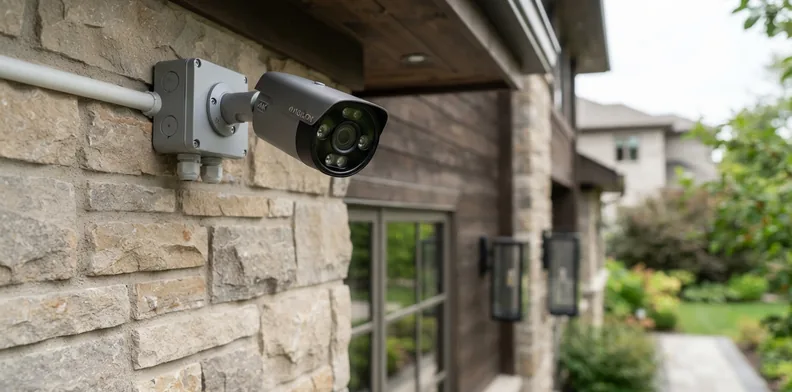
  • Hard-wired PoE cameras. Power and video travel over one Ethernet cable to a recorder, so there is no radio link to jam. This is the single biggest upgrade.
  • Local recording. A camera that records to an SD card or an NVR keeps capturing video even when it can't send an alert.
  • Offline alerts as a tripwire. Turn on "camera offline" or "video loss" notifications. Several cameras dropping at once is itself a warning sign.
  • Alarm jam detection. Many professional wireless alarm panels can treat radio jamming of their own sensors as a trouble or alarm condition. Make sure the setting is on.

Wireless cameras still have a place on detached garages, gates and rentals; our wireless camera guide explains where. Just don't let them be the only thing watching your doors.

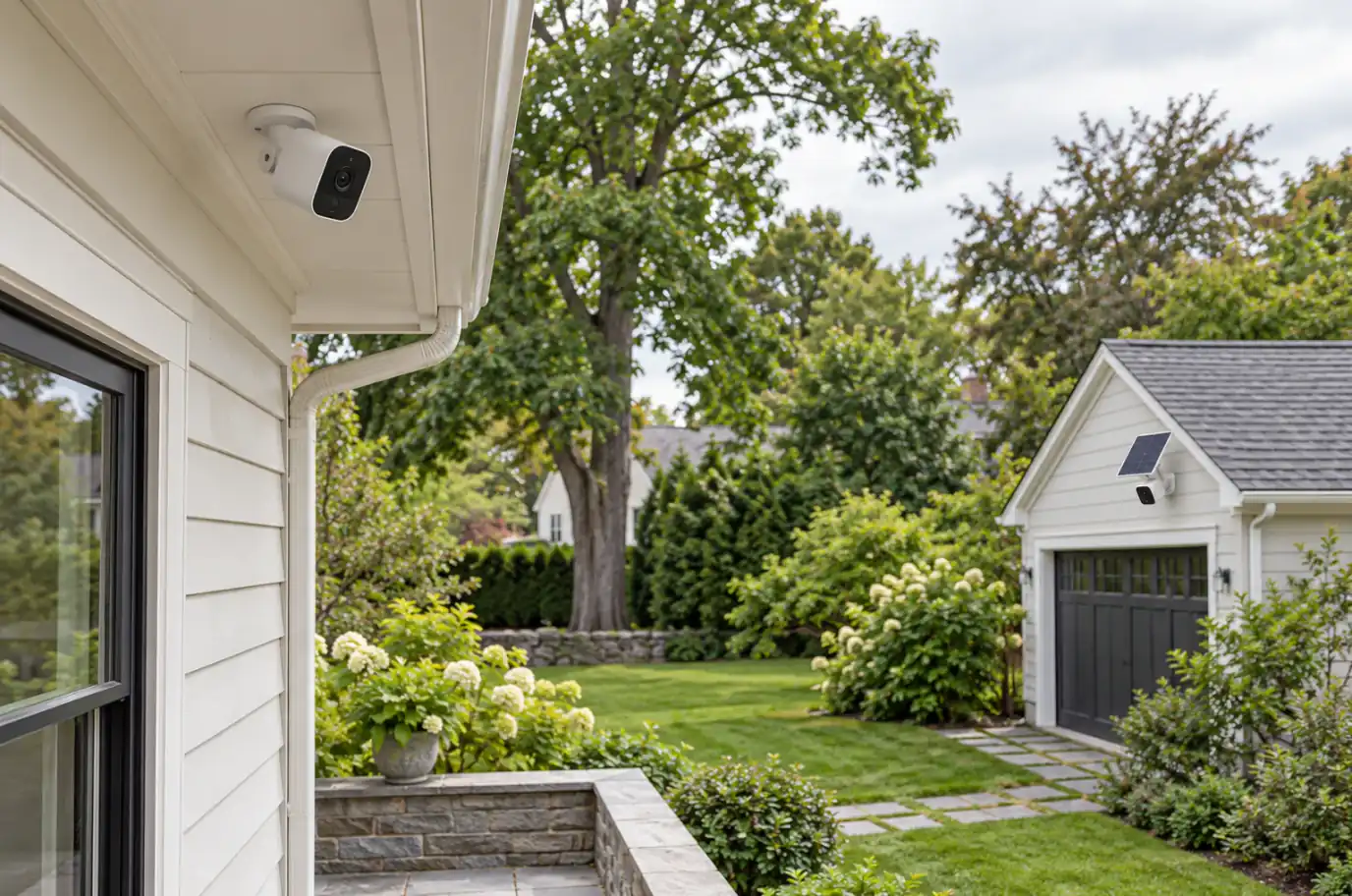
Hard-wired security camera on a stone wall with a weatherproof junction box — there is no Wi-Fi link for a jammer to block

Cutting the Power, the Internet or the Doorbell

Jammers make headlines, but the low-tech attacks are simpler, and just as easy to plan for.

Cutting the internet

A cloud-only camera keeps only what it manages to upload. Cut the cable or fiber line where it enters the house and the recording stops with it. A camera system that records to a local NVR keeps every frame; you lose remote alerts, not evidence. A cellular communicator on your alarm keeps the monitoring center informed either way.

Cutting the power

Put the NVR, the PoE switch and the modem or router on a UPS battery backup. Because PoE cameras draw their power from that switch, the whole camera system rides through an outage on one battery. Runtime depends on the load, so have the UPS sized to your actual equipment. Your alarm panel already has its own battery.

Stealing the doorbell or smashing a camera

A ripped-off Wi-Fi doorbell can take its last clip with it if the upload hadn't finished. Two fixes: add a second camera that can see the doorbell, and keep the recorder somewhere a burglar won't find in two minutes, such as a locked closet or utility room rather than a shelf by the front door. Mount cameras high enough that they can't be reached without a ladder.

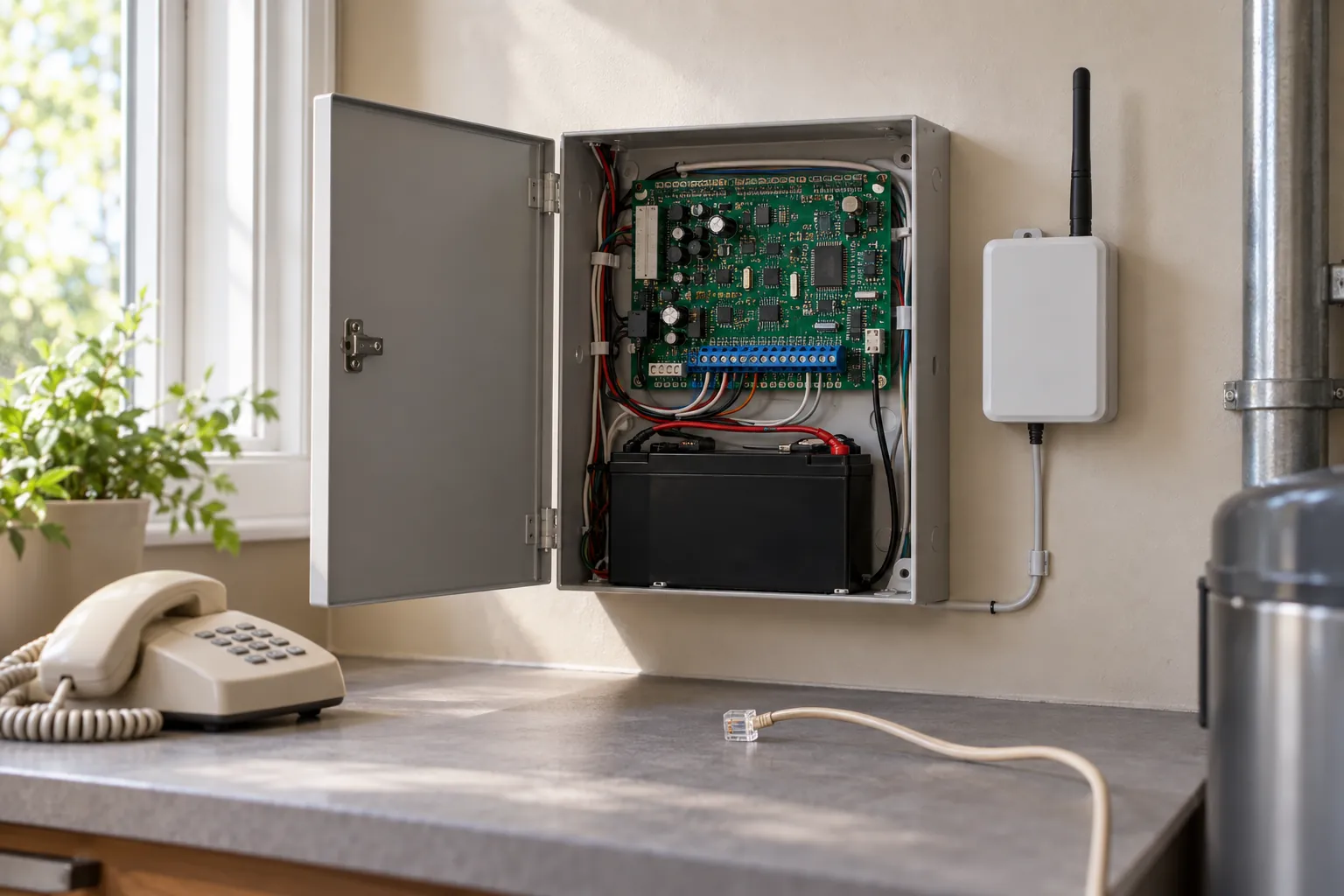
If your alarm still reports over a phone line, that line can be cut too, and in parts of New York and Connecticut copper service may be ending anyway. See what Verizon's copper landline retirement means for your alarm. For recorders, drives and retention, see NVR vs. cloud storage.

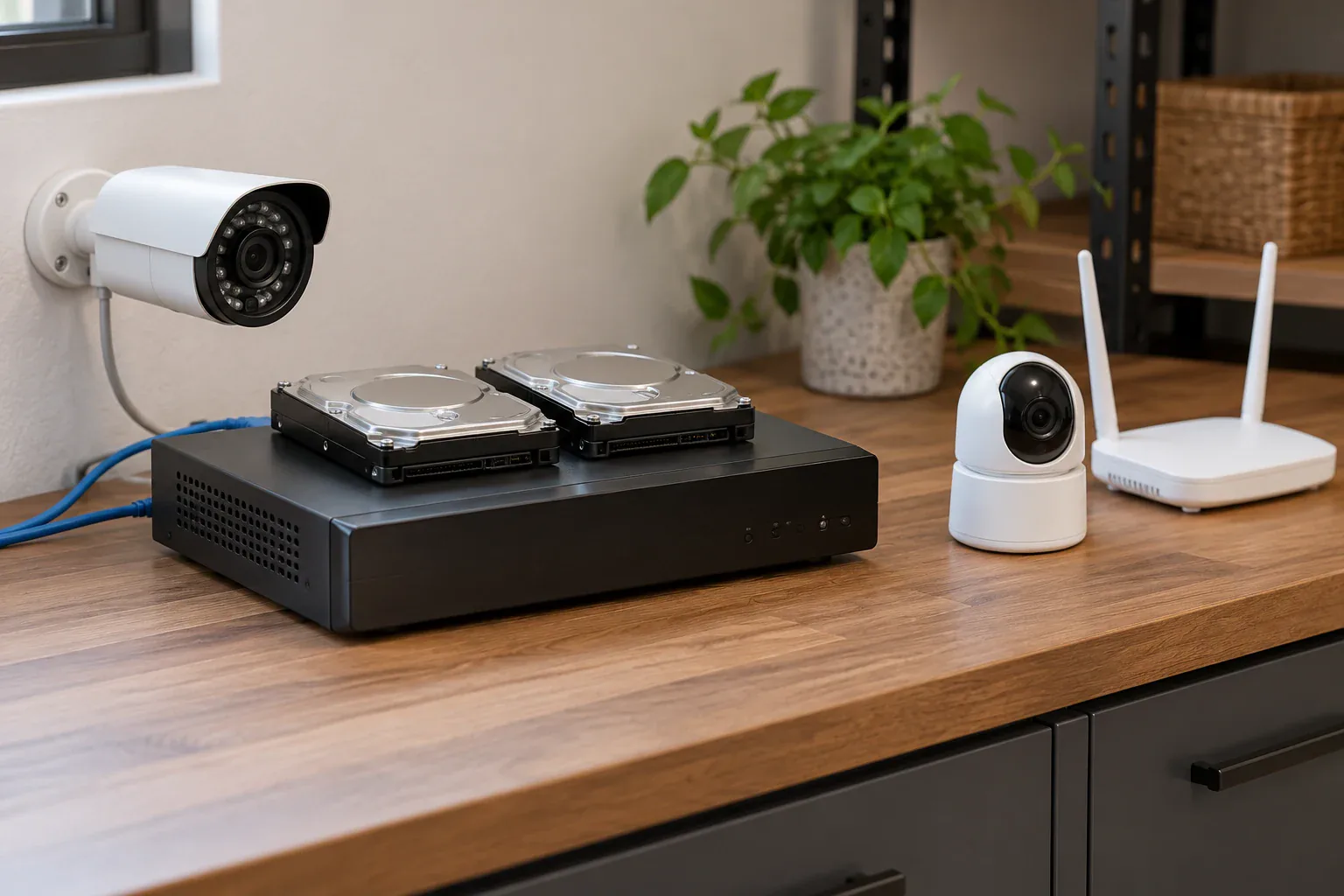
Security camera wired to a local recorder with the internet cable unplugged — local recording keeps going when the internet is cut

The Second-Floor Gap: How Crews Get Into Fairfield & Westchester Homes

The local break-in pattern is less about electronics and more about where alarms aren't. Here is what police have said on the record:

  • Greenwich, April 2023: police reported more than 70 residential burglaries since October 2021, committed "in the evening hours after sunset" by suspects who would "enter through a second-floor window/door." Their key observation: "If the home is armed with an alarm, the suspects flee the area and do not steal any property."
  • New Canaan, 2025: police reported burglaries up 25% (25 through November, compared with 20 a year earlier) and warned that burglars were using ladders to reach second-floor entrances.
  • Greenwich, January 2026: police arrested a suspect charged in burglaries in Greenwich and New Canaan between October 2025 and January 2026, with stolen property valued at more than $1 million. Police said many entries were through second-floor windows and asked residents to make sure their alarms are fully operational, "in particular, second-floor glass break sensors."

Why the upstairs is often unprotected

A typical alarm install puts contacts on the ground-floor doors and a motion detector in the main hallway. Upstairs windows, including the primary bedroom where jewelry and watches are kept, often have no sensor at all. And because these crews come early in the evening, the family is frequently out at dinner with the system disarmed, or at home with it set to a mode that ignores the second floor.

What closes the gap

  • Glass-break sensors upstairs. An acoustic sensor listens for the sound of breaking glass, and one can usually cover every window in a typical bedroom. Put one in the primary suite and in any room with windows a ladder can reach.
  • Contacts on reachable upper windows (over porch roofs, sunrooms and garages), so an opened window trips the alarm, not just a broken one.
  • Arm the system every time you leave, even for dinner. Auto-arm schedules and app reminders remove the "we'll only be gone two hours" gap.
  • Cameras on the back of the house, with person detection on the yard and lower roof lines, the side these crews actually use. See how AI person detection works.
  • Lock up ladders and put lights on timers. New Canaan police specifically warned about burglars using ladders to reach second floors.

Watch for scouting cameras

After the 2024 Scarsdale discovery, police explained that organized groups may place "trail cameras or surveillance devices for maybe multiple days before committing burglaries." If you find an unfamiliar camera aimed at your house, don't touch it; call the police.

Two-story colonial at dusk with upstairs windows lit — the evening, second-floor entry pattern Greenwich and New Canaan police have warned about

What About Hackers?

Most "hacked camera" stories don't involve broken encryption. They involve stolen or reused passwords. The fixes are unglamorous and effective:

  • Use unique passwords and two-factor authentication on every camera and alarm app account.
  • Don't use port forwarding to reach your NVR from outside; use the manufacturer's secure app or a VPN.
  • Keep camera and NVR firmware updated.
  • Put cameras on their own network segment (VLAN), so a compromised device can't reach your laptops, and the reverse.

If you're replacing an older router anyway, our Wi-Fi 7 guide covers what to look for.

Attack-by-Attack: How to Make Your System Hard to Beat

AttackWeak setupHardened setup
Wi-Fi jammerWi-Fi-only cameras and doorbellWired PoE cameras plus offline alerts
Deauth attackOlder router without Protected Management FramesWPA3 router
Internet cutCloud-only recordingLocal NVR plus cellular alarm communicator
Power cutNo backup powerUPS on NVR, PoE switch and router; tested panel battery
Stolen doorbell or cameraOne camera at the door; recorder in plain sightOverlapping cameras; NVR in a locked closet
Second-floor entryGround-floor sensors only; disarmed in the eveningUpstairs glass-break sensors and window contacts; auto-arm
Phone line cutAlarm reports over the landline onlyCellular or dual-path communicator
Account hackingReused password, port forwardingTwo-factor login, no open ports, updated firmware, camera VLAN

The fastest way to find your weak points is a walk-around with someone who installs these systems every week. We check upstairs coverage, which cameras depend on Wi-Fi, where your recorder and internet line live, and what happens when the power goes out, then tell you what's worth fixing. For the full picture of how the layers fit together, see the anatomy of a complete home security system.

Book a free security walk-through or call (914) 247-9506.

Sources

Need expert advice? Get a free consultation.

Licensed installers in CT & NY — no obligation.

Frequently Asked Questions

Can burglars jam Ring and other Wi-Fi cameras?

Yes. Any camera or doorbell that depends on Wi-Fi to send alerts and video, whatever the brand, can be interrupted by a strong enough jammer. Wired PoE cameras recording to a local NVR have no radio link to jam, which is why the Los Angeles County Sheriff recommended hard-wired systems after jammer-related arrests in May 2026.

Can wired security cameras be jammed?

No. PoE cameras send power and video over an Ethernet cable, so radio jammers have nothing to block. Their remaining weak points are power and physical access, which a UPS battery backup and a recorder in a locked closet address.

Are Wi-Fi jammers illegal in the US?

Yes. The FCC says it is a violation of federal law to market, sell or use a jammer in the United States, and penalties can exceed $100,000 per violation. If you suspect jamming, report it to local police and the FCC.

Do alarms and cameras actually deter burglars?

Alarms do, according to the research. In a UNC Charlotte survey of 422 incarcerated burglars, about 83% said they would try to find out whether an alarm was present, and 60% said they would choose another target if there was one. Greenwich police reported that when homes were armed, suspects fled without stealing anything.

How do I protect my second floor from break-ins?

Add acoustic glass-break sensors in upstairs bedrooms and contacts on windows reachable from porch or garage roofs, and arm the system whenever you leave, including evenings out. Lock up ladders and point a camera with person detection at the back of the house.

How can I tell if my security cameras are being jammed?

Watch for several wireless cameras going offline at the same time, or gaps in their recordings. Turn on offline or video-loss notifications in your camera app or NVR, so an outage alerts you instead of passing unnoticed.

About the author

Julio Cabrera

Julio Cabrera

Founder & Lead Low-Voltage Technician

Julio founded Rolo Electronics in 2014 after a decade installing commercial CCTV and structured cabling across Westchester and Fairfield counties. He personally oversees every residential design at Rolo, focusing on hidden cabling, local NVR storage, and contract-free systems for Greenwich, Stamford, and Rye estates.

LinkedIn

Related Articles

Back to all articles