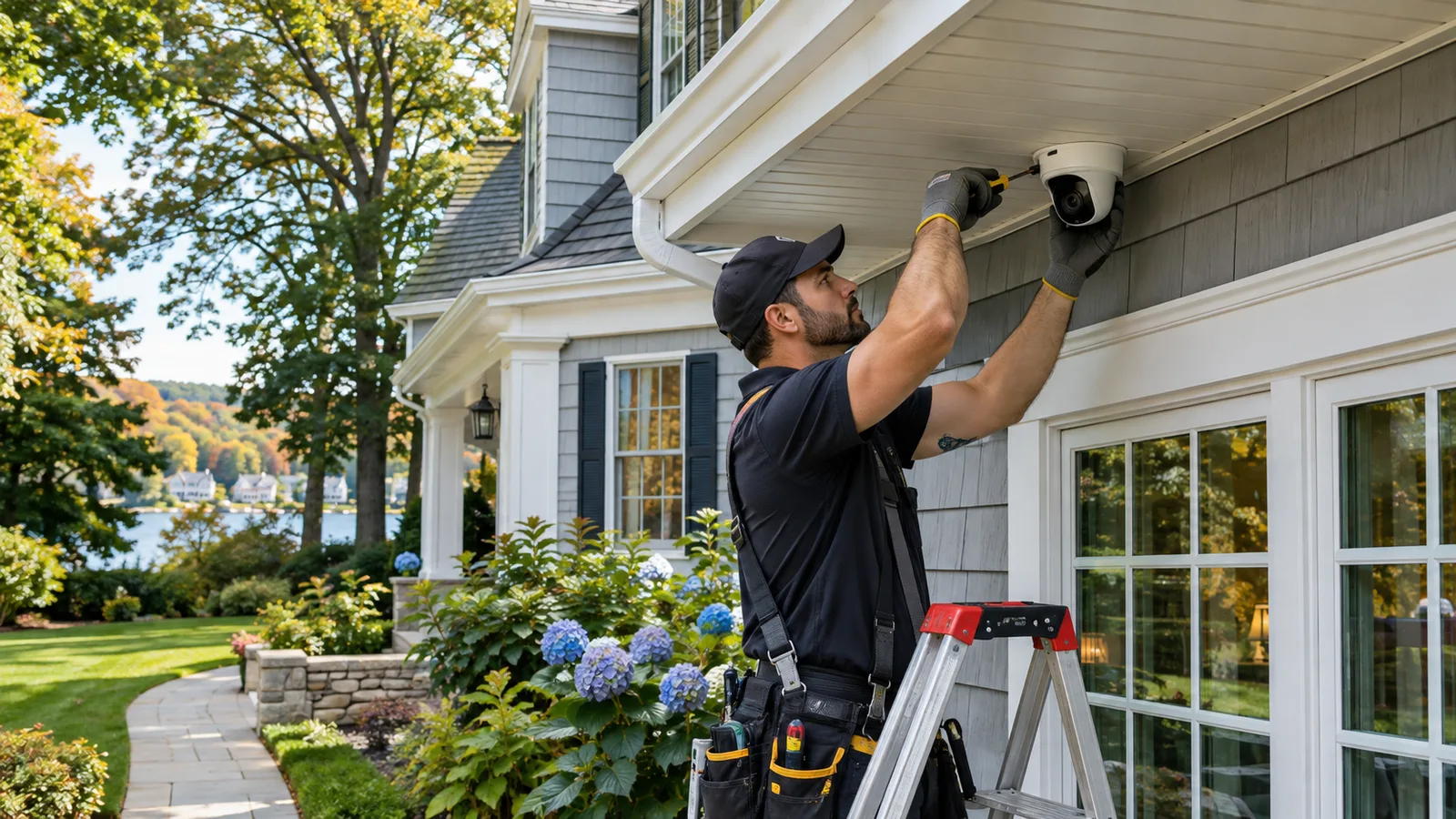
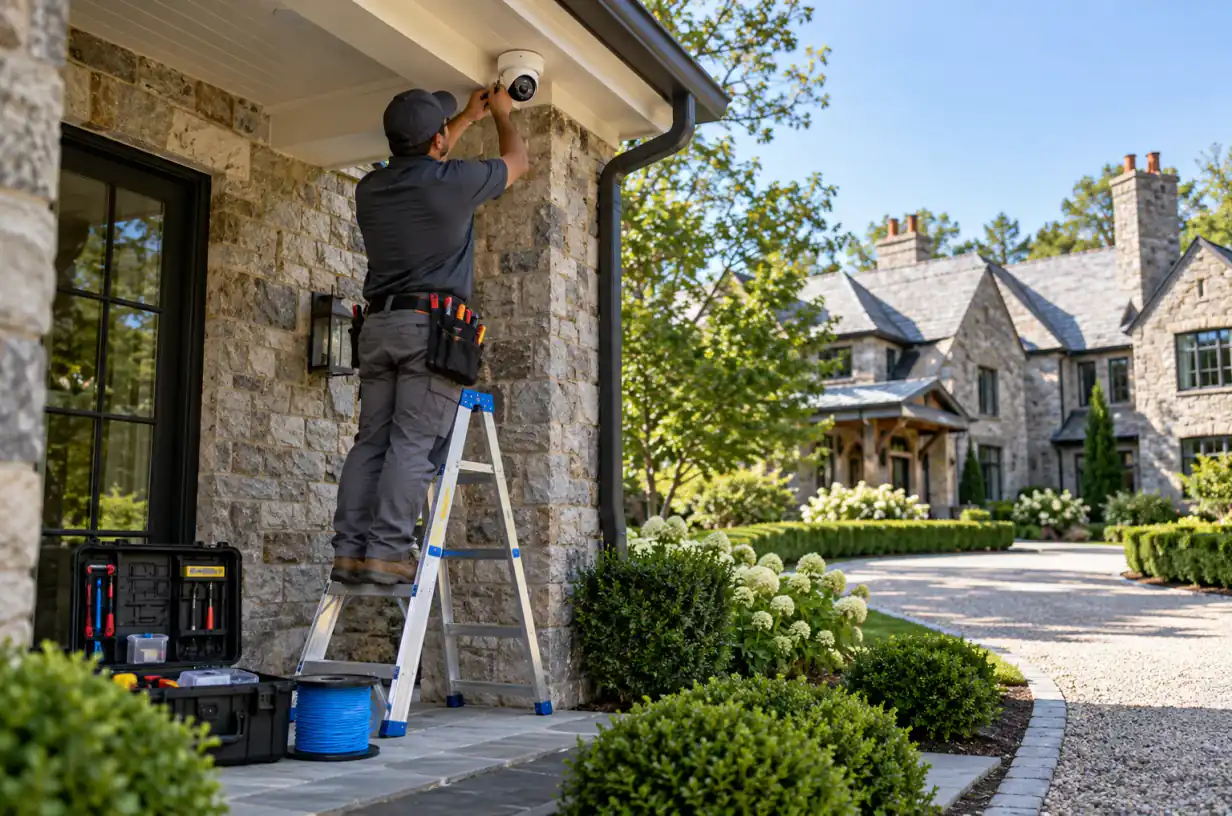
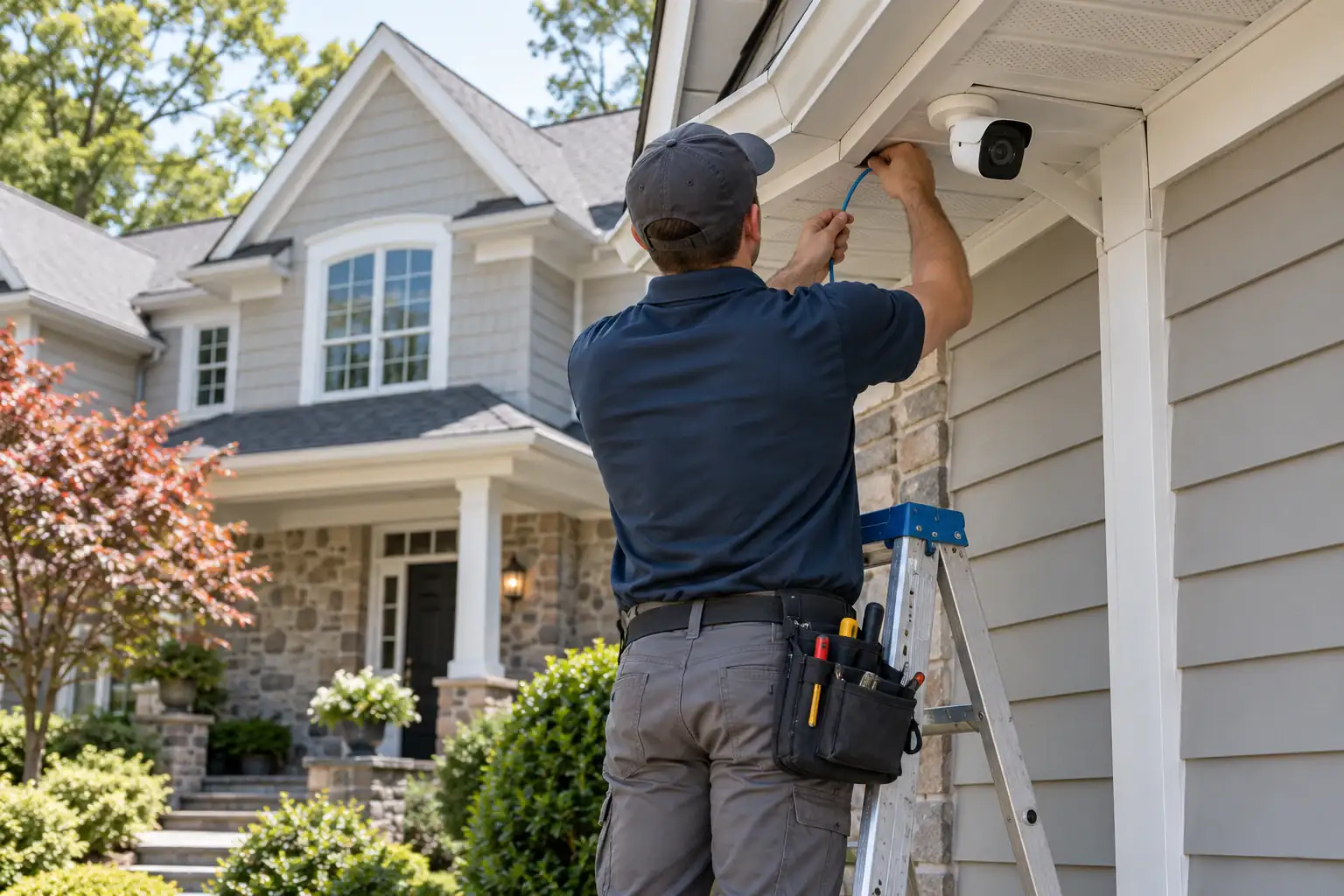
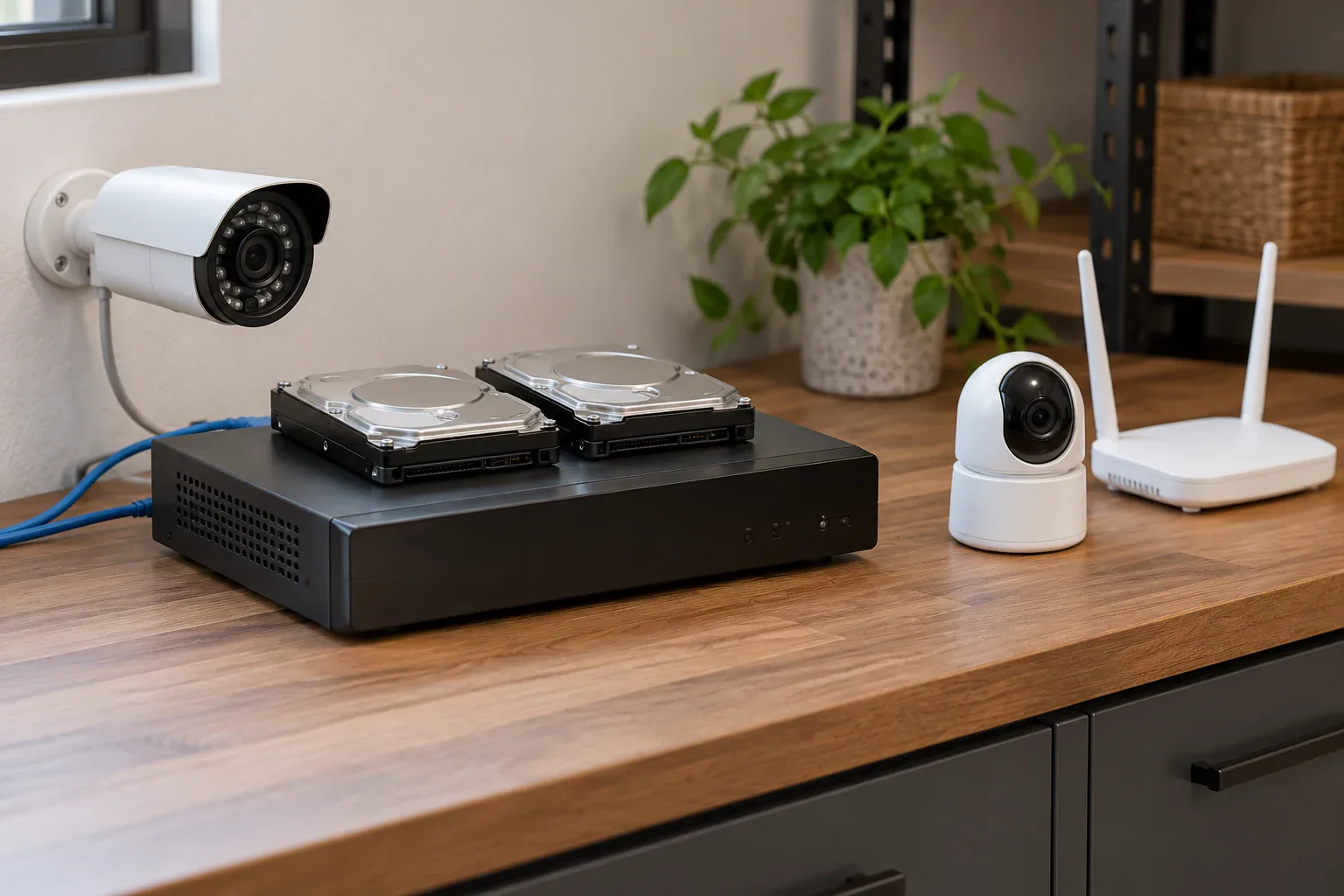
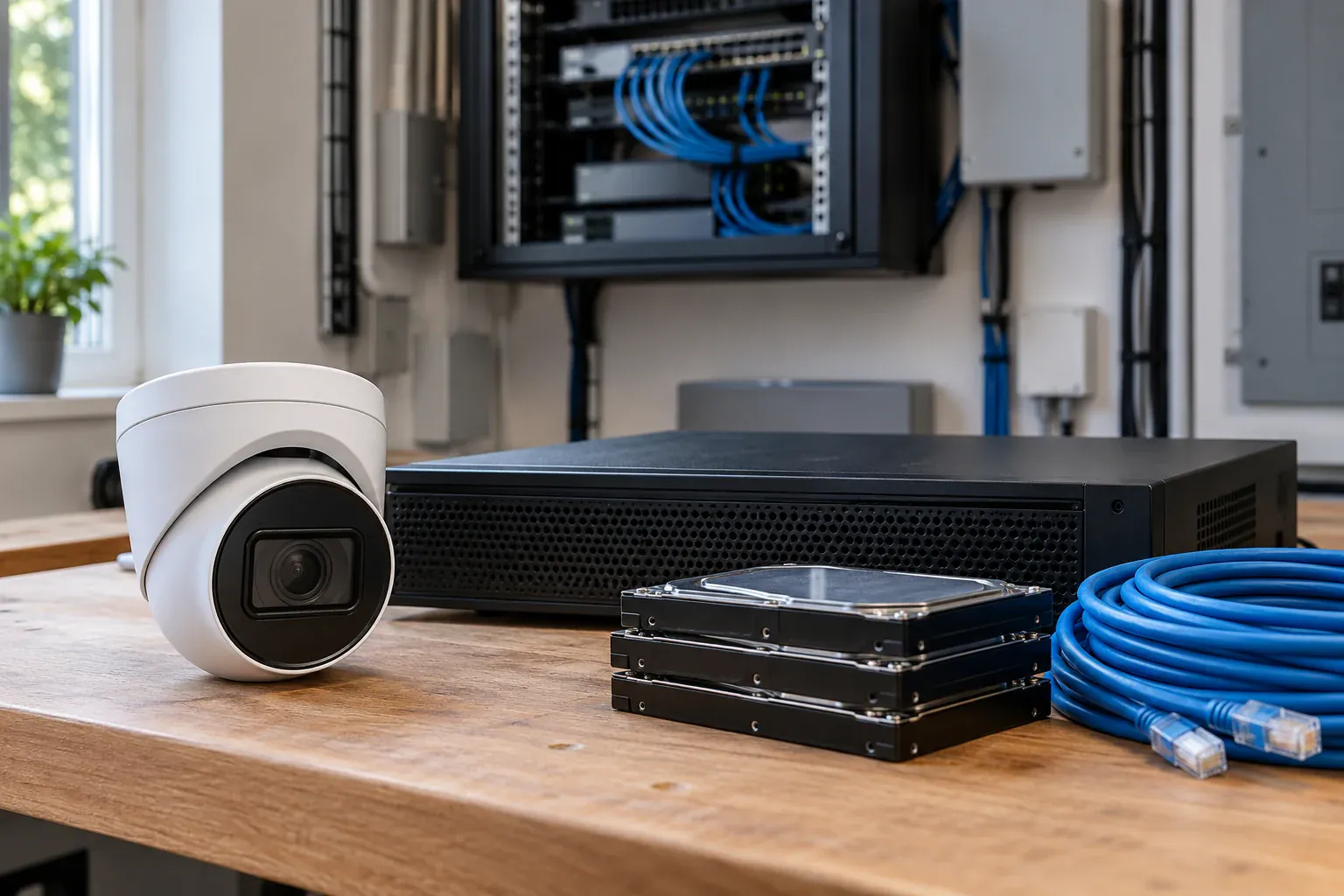
The first half of a quote describes the physical system: what gets installed, where, and how the wire gets there.
Equipment: cameras, recorder and the parts in between
Each camera should appear with its model, the mounting location (for example "front door, under soffit" or "driveway, garage corner") and its type: fixed lens, varifocal, turret, bullet or dome. Ask for the resolution and whether the camera has a built-in microphone, infrared or colour night vision, and any analytics (person and vehicle detection) that the recorder will actually use.
The recorder line should state the number of channels the NVR supports, the drive capacity that is included, and whether it has a built-in PoE switch or a separate switch is listed. A quote that names "8-channel NVR" without a drive size leaves the single most important storage question open; see NVR vs. cloud storage for why that matters.
Smaller parts are often where quotes diverge: junction boxes that keep the cable connection off the wall, mounting brackets or pole adapters, surge protection, a UPS for the recorder, and the patch cables or wall plates at the rack. A good proposal either lists them or states that they are included in the labor.
Cable Routes in Finished Homes
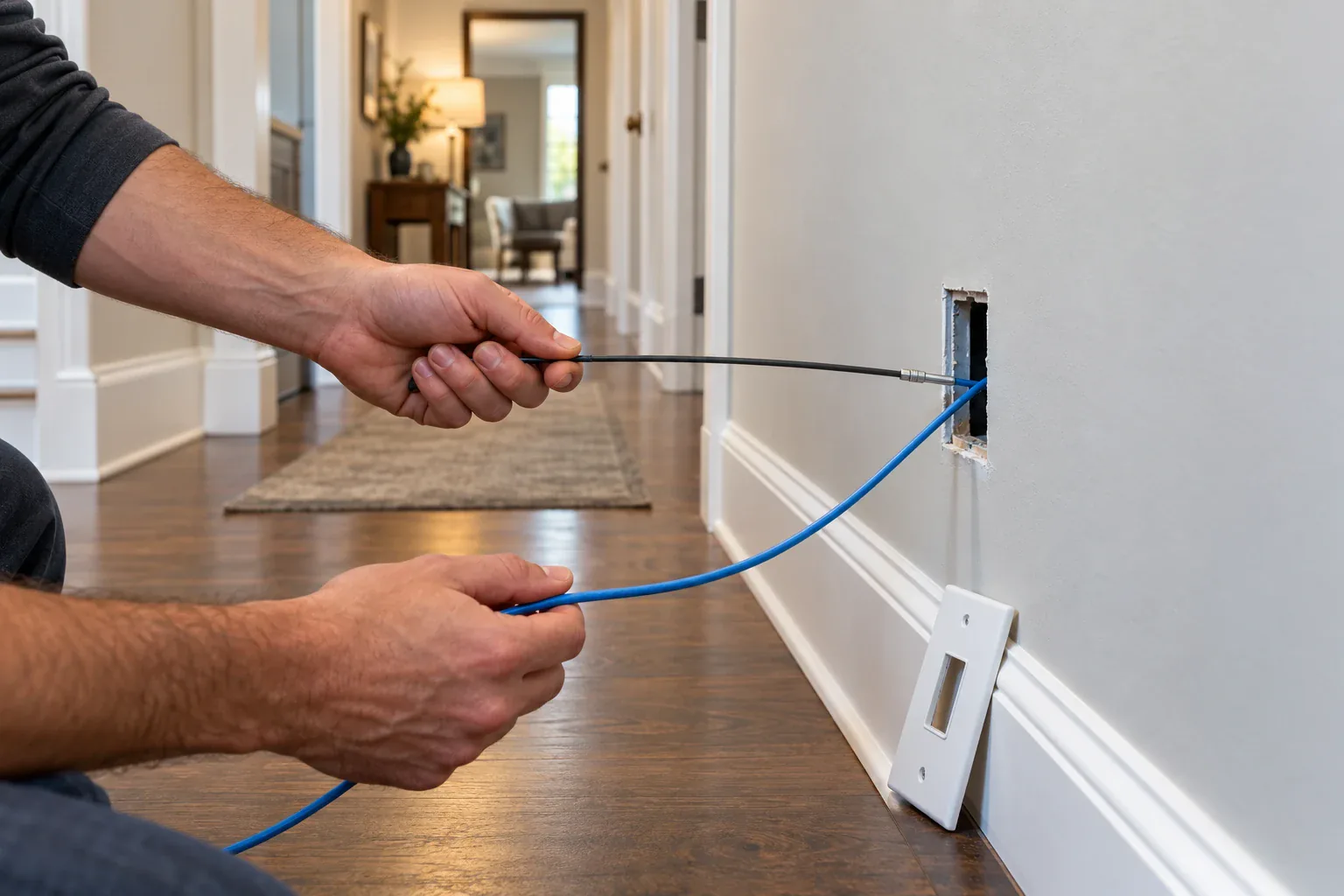
In a finished house in Fairfield County or Westchester, the cable route is the part of the job that takes the most time and the part most proposals describe least. Each camera needs one Ethernet run from the recorder (or switch) to the mounting point. How that run is made changes the labor, the risk of visible wire and the patching you will need afterward:
- Attic and basement access. Runs that drop from the attic into soffits or rise from the basement through exterior walls are concealed by default. The quote should say which cameras use these paths.
- Finished walls and ceilings. A camera on a second-floor wall with no attic above it may need a fished route behind drywall or trim, or a small access opening. Ask whether patching and painting are included or left to you.
- Exterior conduit or surface raceway. On brick, stone and stucco, or where no interior path exists, cable may run in painted conduit. If so, the proposal should say so and show roughly where.
- Detached structures. A garage or gate camera may need a trenched conduit, a point-to-point wireless bridge or a battery or solar camera instead. Each is a different line item.
Our guide to hidden cable installation in finished homes walks through these routes in more detail.
Labor, mounting and terminations
Labor should be described as what gets done, not just hours. For a camera system that usually means: mounting each camera with the correct box or bracket for the surface, running and securing the cable, terminating both ends (a weather-sealed connection at the camera, labelled ports at the recorder), mounting and powering the recorder, and clean-up. If the installer will also mount a small rack or shelf for the recorder and switch, that belongs here too.
Ask where the recorder will live. A locked closet or utility room is better than a shelf by the front door, both for tidiness and because a recorder that is easy to find is easy to take.