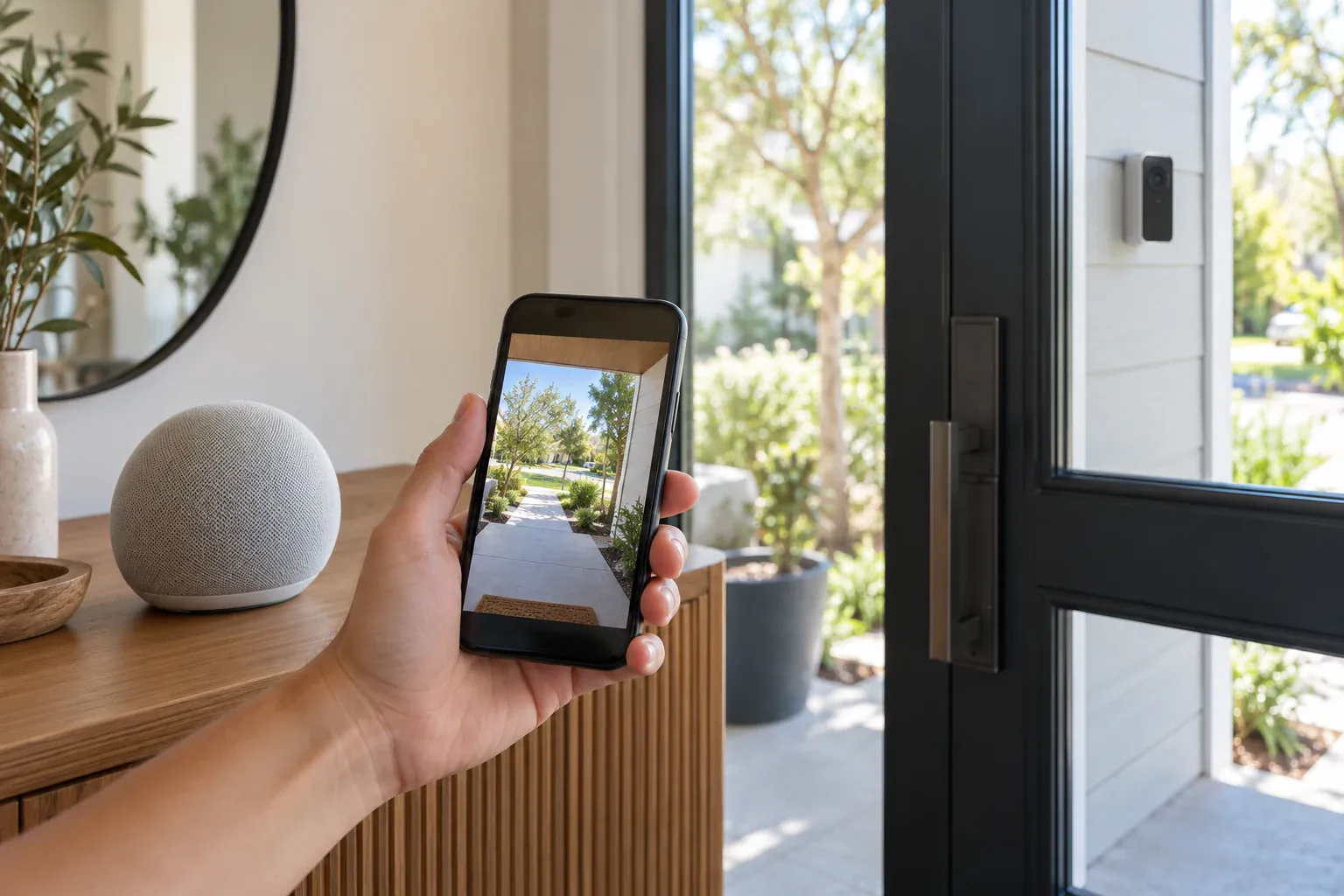
Smart home lighting controlled through the Matter standard from any ecosystem app

Matter in 2026: The Smart Home Standard That Finally Makes Everything Work Together

Julio CabreraFounder & Lead Low-Voltage Technician8 min read

Last updated:

What Matter Is (in Plain English)

Matter is a shared language for smart home devices, backed by Apple, Google, Amazon, and Samsung. A Matter-certified lock, light, or thermostat works with any of their apps — no more checking "Works with Alexa" badges. In 2026 Matter is the default on new devices, though cameras remain the big gap.

Before Matter, every purchase was an ecosystem decision: HomeKit households couldn't use half the market; switching from Alexa to Google meant re-buying gear. Matter moves the compatibility question from the brand to the standard — one certification, every major platform.

It also fixes a quieter problem: local control. Matter devices talk directly to your hub over your home network, not through a manufacturer's cloud — so automations keep working when the internet doesn't, and your usage data stays home.
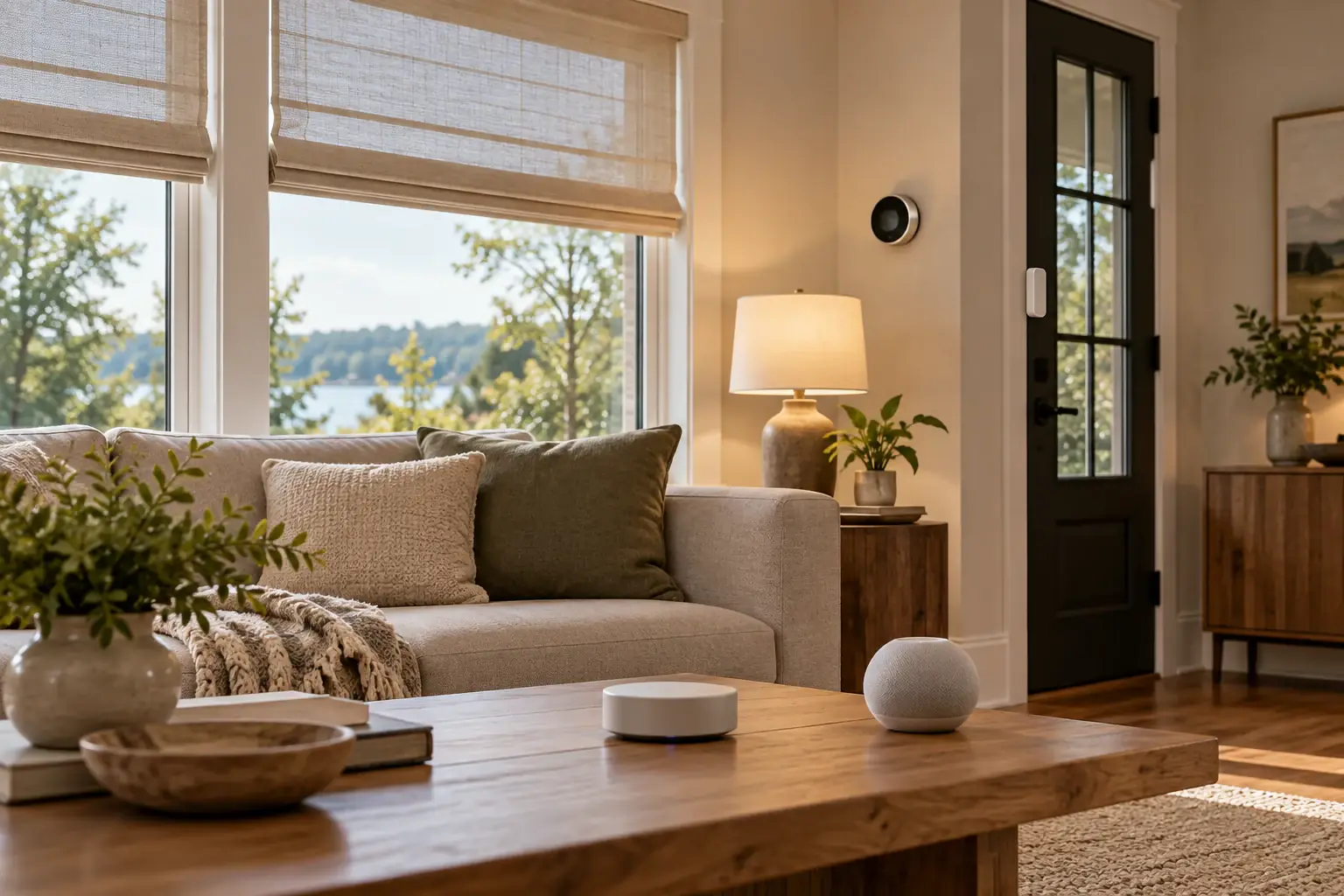
The State of Matter in 2026

Coverage of the 2026 interoperability landscape puts it plainly: the era of fragmented ecosystems is largely behind us. Concretely:

  • Matter is the default on new SKUs from major brands — lights, plugs, locks, thermostats, sensors, blinds ship certified out of the box.
  • Hubs are built into gear you already own: current mesh routers (eero Pro 7, Nest WiFi Pro), Apple TV, HomePods, and Echo speakers all act as Matter controllers and Thread border routers.
  • Legacy Zigbee/Z-Wave gear bridges in through transitional hubs, so existing installs aren't stranded.

Translation for homeowners: if you're buying smart home devices in 2026 and a product isn't Matter-certified, you need a specific reason why.

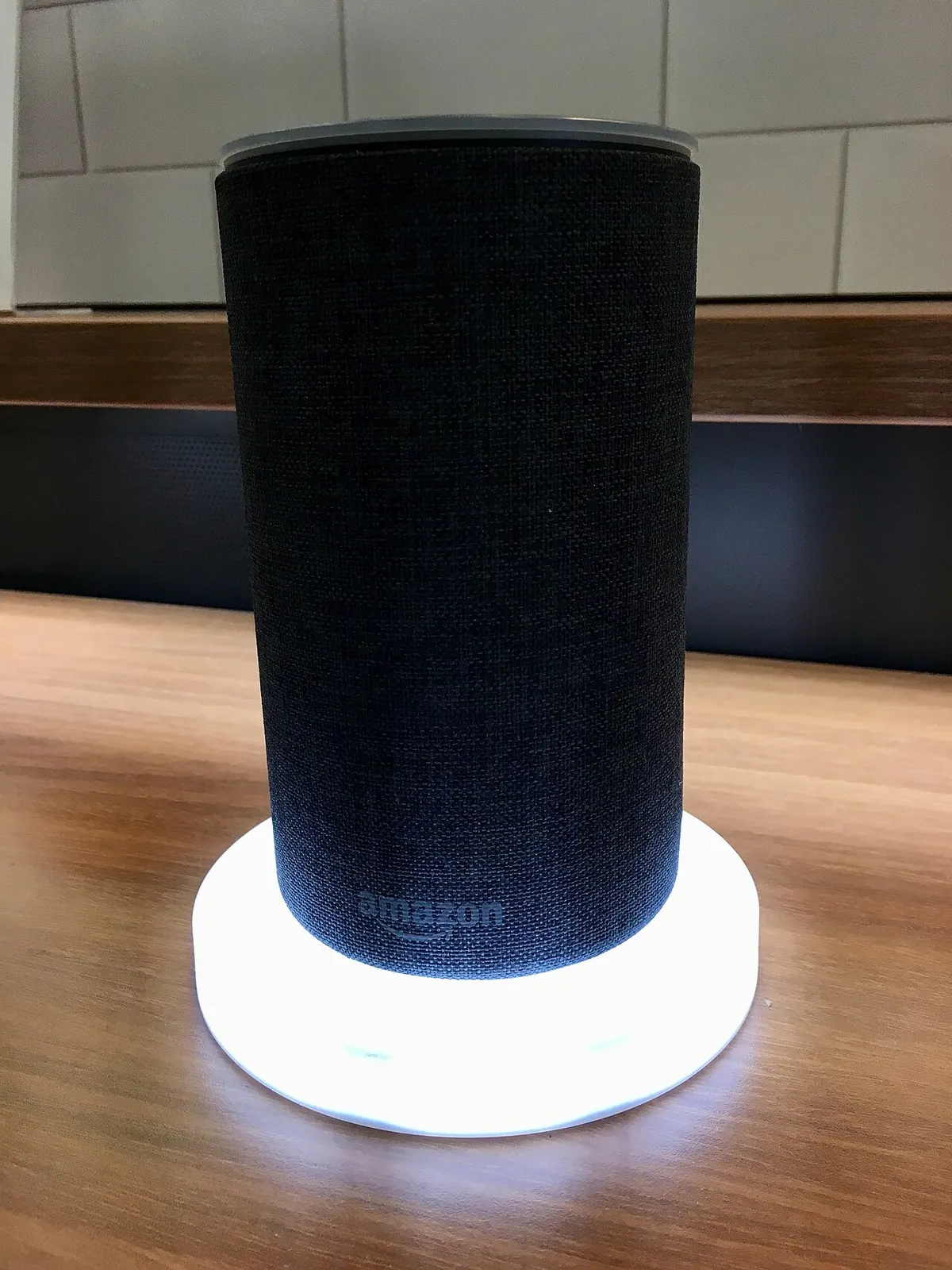
Amazon Echo smart speaker acting as a Matter controller and Thread border router

Thread & Border Routers: the Invisible Backbone

Matter is the language; Thread is the radio many devices speak it over. Thread is a low-power mesh network — every plugged-in Thread device relays for its neighbors, so coverage improves as you add devices instead of degrading.

The piece people miss is the Thread border router: the bridge between the Thread mesh and your Wi-Fi network. You almost certainly own one already (Apple TV 4K, HomePod, newer Echos, eero and Nest routers). Two practical notes from our installs:

  • Placement matters. A border router in the basement rack serves a Thread mesh poorly; centrally located speakers or streamers do it better.
  • Battery devices love Thread. Door sensors and buttons on Thread run 2–3× longer than their Wi-Fi equivalents because the radio sips power.

A solid network underneath still decides everything — Thread handles the small devices, but hubs, cameras, and streamers ride your Wi-Fi. If that layer is shaky, start with our Wi-Fi 7 upgrade guide.

What Works Today — and What Still Doesn't

Mature and reliable over Matter: lighting, smart plugs, thermostats, door locks, contact/motion sensors, blinds and shades, air quality monitors. This covers most of a whole-home automation project.

Still partial or platform-specific:

  • Cameras. Matter camera support arrived late and thinly — most cameras still live in their own apps or platform integrations. For now, camera strategy stays separate from Matter strategy (ours: PoE cameras on a local NVR, per our no-subscription guide).
  • Advanced device features. Matter exposes the common core (on/off, lock/unlock, setpoints); brand apps still unlock the long tail (lock auto-unlock rules, light effects).
  • Robot vacuums, appliances. Support exists on paper; execution varies by brand.

Matter complements rather than replaces your platform of choice — you still pick HomeKit, Google Home, or Alexa as your control surface, and our HomeKit & Google Home integration guide covers that layer.

How to Buy Without Getting Locked In

  • Require the Matter logo on new lights, plugs, locks, thermostats, sensors, and shades. Prefer Thread over Wi-Fi versions for battery devices.
  • Don't re-buy working gear. Existing Zigbee/Z-Wave devices bridge into Matter through hubs like SmartThings or Aqara — replace on failure, not on principle.
  • Keep cameras out of the Matter decision. Buy cameras for image quality, local storage, and AI detection; treat any Matter support as a bonus.
  • One controller per platform you use. An Apple TV for HomeKit or an Echo for Alexa is enough; more just adds border-router redundancy (which is fine).

Brands we install that play well in a Matter home: Lutron (lighting — bridge-based and rock-solid), Aqara and Eve (Thread sensors), Yale and Level (locks), Sonos (audio, its own excellent ecosystem).

Making It All Actually Work Together

Matter fixed compatibility; it didn't fix design. Which rooms get motion-triggered lighting, where Thread needs a powered relay, how the camera VLAN stays isolated from the toy network, what happens to automations when the power blinks — that's still system design, and it's what we do.

Sources

Need expert advice? Get a free consultation.

Licensed installers in CT & NY — no obligation.

Frequently Asked Questions

What is Matter in simple terms?

Matter is a shared language for smart home devices backed by Apple, Google, Amazon, and Samsung. A Matter-certified light, lock, or thermostat works with any of their apps — you no longer have to check 'Works with Alexa' badges before buying.

Does Matter replace Alexa, Google Home, or HomeKit?

No — it complements them. You still choose one of those platforms as your control surface (the app and voice assistant); Matter just guarantees your devices work with whichever one you pick, and lets you switch later without re-buying hardware.

Do I need to buy a special Matter hub?

Probably not. Current Apple TVs, HomePods, Echo speakers, and mesh routers like eero Pro 7 and Nest WiFi Pro already act as Matter controllers and Thread border routers. Most homes own at least one without realizing it.

Does Matter work when the internet is down?

Yes. Matter devices communicate locally over your home network, so automations, switches, and locks keep working during an internet outage — one of its biggest advantages over older cloud-dependent smart home gear.

About the author

Julio Cabrera

Julio Cabrera

Founder & Lead Low-Voltage Technician

Julio founded Rolo Electronics in 2014 after a decade installing commercial CCTV and structured cabling across Westchester and Fairfield counties. He personally oversees every residential design at Rolo, focusing on hidden cabling, local NVR storage, and contract-free systems for Greenwich, Stamford, and Rye estates.

LinkedIn

Related Articles

Back to all articles
Need help? Text us!