A single Wi-Fi router has a practical range of about 1,500 square feet under ideal conditions. In real-world homes, that range drops significantly due to:
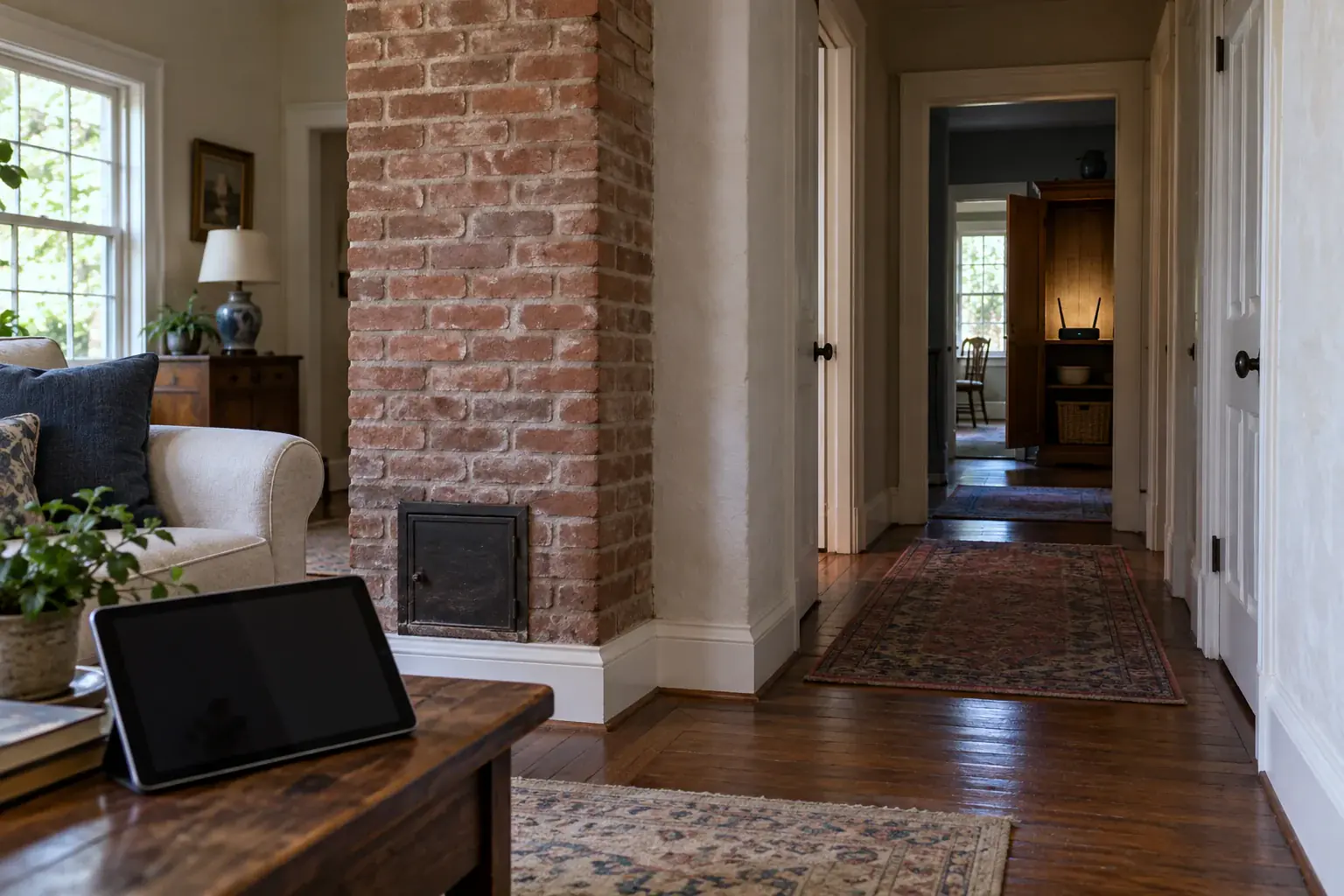
- Thick walls — plaster, brick, and stone walls (common in Connecticut’s older homes) can reduce signal by 50–70% per wall
- Multiple floors — signals weaken dramatically between floors, especially through concrete or heavy framing
- Distance — homes over 3,000 sq ft simply exceed a single router’s effective range
- Interference — neighboring Wi-Fi networks, microwaves, Bluetooth devices, and baby monitors compete for the same radio frequencies
- Router placement — most routers are placed near the cable entry point (usually a basement or utility room), not in the center of the home
In a typical 4,000+ sq ft Connecticut home with 2–3 floors, the upstairs bedrooms, basement, and outdoor areas almost always have poor or no Wi-Fi coverage from a single router.